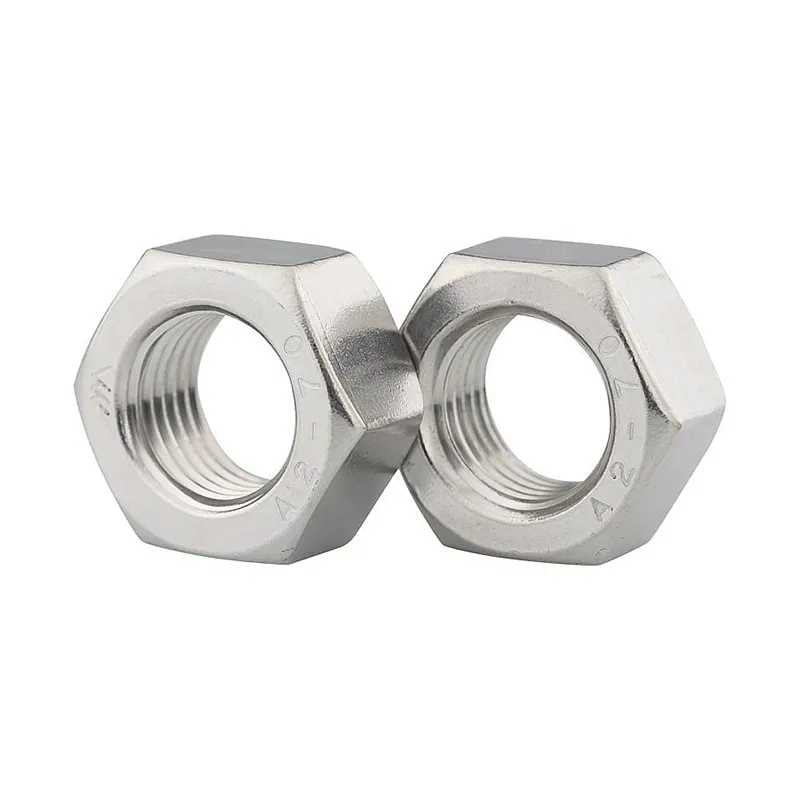
Lock Nut OEM RFQ Callouts
OEM buyers who only write “lock nut” on vibration BOMs often get dual quotes: one desk assumes an all-metal prevailing-torque lock nut, another substitutes a nylon-insert lock nut, jam nut, castle nut, cap nut, wing nut, or flange nut. This Ruike (Ningbo Hongyuan Precision Hardware Manufacturing Co., Ltd. / HY) guide locks lock nut OEM RFQ callouts for all-metal / prevailing-torque styles in buyer English. It complements—not replaces—the sibling cap nut OEM RFQ, the wing nut OEM RFQ, the square nut OEM RFQ, the flange nut OEM RFQ, the tee nut OEM RFQ, the cage nut OEM RFQ, the coupling nut OEM RFQ, the weld nut OEM RFQ, the clinch nut OEM RFQ, the rivet nut OEM RFQ, the self-clinching nut OEM RFQ, the threaded rod OEM RFQ, the stud bolt OEM RFQ, and the blind rivet OEM RFQ. For DIN 985 nylon-insert geometry see the separate DIN 985 nyloc nut OEM RFQ—do not treat this page as that nylon slug.
Plant context: About Us. Browse related hardware under nuts. Hub index: Guides. Industry context: Applications. General RFQ questions: FAQ.
What should an OEM RFQ freeze for a lock nut?
A lock-nut RFQ must freeze all-metal / prevailing-torque lock style, hex size across flats, height, thread series and class, and material/finish—so buyers cannot silent-swap a nylon-insert lock nut, jam nut, castle nut, cap nut, wing nut, or flange nut. Name “all-metal lock nut”; attach PDF/STEP and open Get a Quote on one enquiry thread.
What a lock nut means on an HY RFQ
On this page, a lock nut means an all-metal prevailing-torque lock nut (distorted thread, oval top, or similar metal locking feature) that resists loosening under vibration without a nylon insert. Buyers name all-metal / prevailing-torque style, hex size across flats, height, thread series and class, and material/finish. It is not a nylon-insert / nyloc lock nut (see DIN 985 nyloc nut OEM RFQ), not a thin jam nut, not a castle nut with cotter slots, not a cap / acorn nut with a closed dome, not a wing / butterfly nut with hand ears, and not a flange / serrated flange nut unless the Rev explicitly owns those forms. Use this page when the RFQ language is “all-metal lock nut / prevailing-torque lock nut / metal lock nut”; use the nylon DIN 985 page when the drawing owns a nylon insert.
When OEM drawings should freeze all-metal lock-nut geometry
- Vibration or temperature programs that reject nylon inserts and need metal prevailing torque.
- BOMs that previously received nylon-insert, jam, castle, cap, wing, or flange nuts when engineering needed all-metal lock.
- Programs that mix “lock nut” language with anonymous “nyloc,” “stop nut,” or scrap-hex lines.
- Jobs that still need mating bolt engagement—see also how to measure screw length.
All-metal lock vs nylon-insert / jam / castle — RFQ comparison
| Callout | All-metal lock nut (this page) | Nylon / jam / castle / other |
|---|---|---|
| Buyer language | All-metal lock · prevailing-torque · metal lock | Nylon-insert / nyloc (DIN 985) · jam · castle · cap · wing · flange |
| Locking feature | Metal distortion / oval / prevailing torque | Nylon ring · thin second nut · cotter slots · dome cover · hand ears · washer flange |
| Key callouts | Lock style, hex A/F, height, thread, material | Insert class · jam thickness · castle slot · dome height · ear span · flange Ø |
| Typical mix-up | “Lock nut” without metal vs nylon callout | Silent swap to DIN 985 nylon, jam, castle, cap, or wing |
Callouts that keep lock-nut intent clear
- Family — all-metal / prevailing-torque lock nut—not “nyloc any,” “jam any,” “castle any,” or “cap any.”
- Lock style — distorted thread, oval top, or named metal prevailing feature as on the Rev.
- Hex size / height — across-flats and nut height as owned.
- Thread — series and class for the mating bolt as on the Rev.
- Material / finish — named for the nut body; finish does not invent lock style or invent a nylon insert.
Cross-reference pitfalls
Do not treat all-metal lock nuts as drop-in nylon-insert lock nuts, jam nuts, castle nuts, cap nuts, wing nuts, or flange nuts. Do not assume a DIN 985 nylon ring meets an all-metal prevailing-torque drawing. Lock style, hex A/F, and height stay on the RFQ with the thread callout. For nylon-insert geometry see the DIN 985 nyloc nut OEM RFQ; for closed domes see the cap nut OEM RFQ; for hand ears see the wing nut OEM RFQ; for flanged hex see the flange nut OEM RFQ.
What to send with the RFQ
Attach the controlling PDF/STEP, name all-metal / prevailing-torque lock intent, hex size across flats, height, thread series and class, material/finish, qty band, and destination. Open Get a Quote so one enquiry thread owns the revision. Ruike will not invent ISO certificates, MOQ tables, or lead-time promises on this public page.
FAQ — lock nut OEM RFQ
What is a lock nut on an OEM RFQ (this page)?
It is an all-metal prevailing-torque lock nut (distorted thread, oval top, or similar metal locking feature). Freeze lock style, hex A/F, height, thread, and material—do not stop at “lock nut” or assume a nylon insert.
How does an all-metal lock nut differ from a nylon-insert lock nut?
All-metal lock freezes a metal prevailing-torque feature. Nylon-insert / nyloc uses a polymer ring (often DIN 985). Use the DIN 985 nyloc nut OEM RFQ when the drawing owns nylon—do not duplicate the same RFQ on both pages.
Is a jam nut or castle nut the same as a lock nut?
No by default. A jam nut is a thin second nut; a castle nut uses cotter slots. Freeze the all-metal prevailing feature the Rev owns. If the BOM says “nyloc,” “jam,” “castle,” “cap,” or “wing,” follow those OEM RFQ pages instead.
How should lock style and hex size be called out?
State all-metal / prevailing-torque style, hex size across flats, height, thread series and class, and material/finish. For mating bolt engagement length, see how to measure screw length.
What should I send so Ruike can quote lock nuts?
Send PDF/STEP, all-metal lock style, hex A/F, height, thread series, material/finish, qty band, and destination via Get a Quote. Ruike does not invent ISO certs, MOQ, or lead times on your behalf.