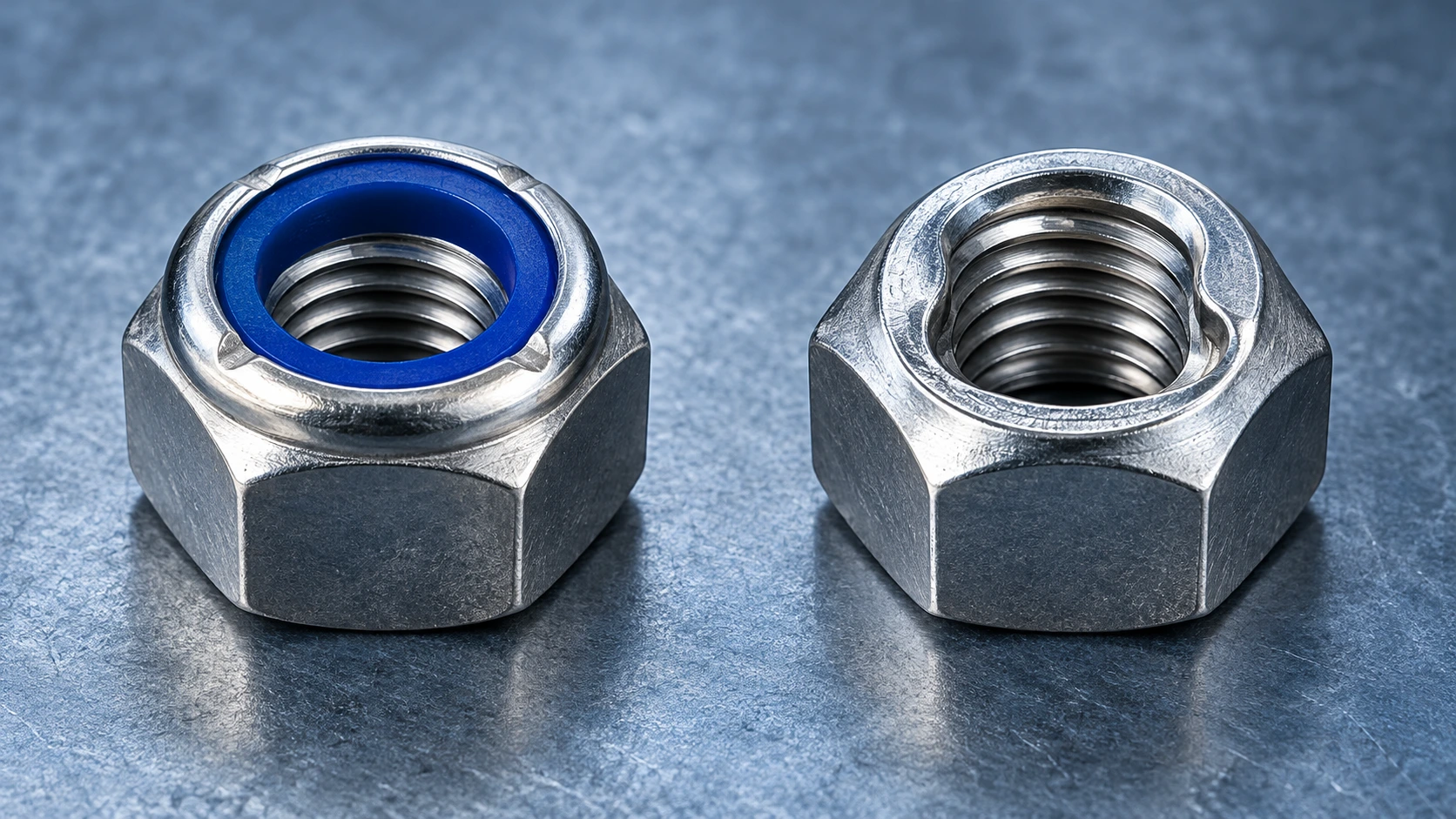
DIN 985 Nyloc Nut OEM RFQ Guide
OEM buyers calling only “nyloc” or “lock nut” on mixed metric BOMs often get dual quotes: one desk assumes a DIN 985 / ISO 10511 nylon-insert hex nut, another ships a plain DIN 934 hex nut or an all-metal prevailing-torque lock nut. This Ruike (Ningbo Hongyuan Precision Hardware Manufacturing Co., Ltd. / HY) guide locks DIN 985 nyloc-nut OEM RFQ callouts in buyer English. It complements—not replaces—the nylon-insert vs prevailing-torque lock nut note, the DIN 934 hex-nut guide, and nut browsing under the category hub.
Plant context: About Us. Browse related hardware under nuts, nylon insert lock nuts, and bolts. Hub index: Guides. Industry context: Applications. General RFQ questions: FAQ.
What DIN 985 means on an HY RFQ
DIN 985 (often ISO 10511 for thin nylon-insert hex nuts) names a prevailing-torque hex nut with a nylon ring—not a plain DIN 934 and not an all-metal lock nut. On HY OEM RFQs, freeze standard, size×pitch, class or stainless mark, and height style—do not quote “nyloc similar.”
When OEM drawings should freeze DIN 985 (or ISO 10511)
- Vibration joints that need a nylon-insert prevailing-torque nut—not a plain hex nut plus separate lock washer.
- BOMs that previously received DIN 934 when engineering meant a nylon-insert lock nut.
- Programs that must keep thin-style (ISO 10511 family) vs regular-height nylon-insert nuts distinct.
- Jobs that still name property class or stainless mark separately from the lock-nut family—see A2 vs A4.
DIN 985 vs nearby nut families — RFQ comparison
| Family | How to write it | Typical RFQ failure |
|---|---|---|
| DIN 985 / ISO 10511 nylon-insert | Standard + size×pitch + class/mark + height if owned | Quoted as plain DIN 934 |
| DIN 934 plain hex | Named plain hex—see DIN 934 guide | Quoted as nyloc without insert |
| All-metal prevailing-torque | Named all-metal lock family | Silent-swapped for nylon-insert |
Callouts that keep DIN 985 intent clear
- Standard — DIN 985 and/or ISO 10511 as owned by the Rev—not “nyloc similar.”
- Size — diameter×pitch matching the bolt thread system.
- Height — thin vs regular nylon-insert style if the Rev owns one.
- Property class / stainless mark — separate fact; insert color does not invent class—see DIN 934 for plain-hex contrast.
- Temperature / reuse — if the Rev limits nylon temperature or reuse cycles, write it on the enquiry thread.
- Mating bolt — keep the bolt on its own BOM line (DIN 933 when hex bolts apply).
Cross-reference pitfalls
Do not treat DIN 985 as interchangeable with all-metal prevailing-torque lock nuts—see nylon-insert vs prevailing-torque. Do not omit height style when ISO 10511 thin nuts are owned. Finish or insert color does not invent property class.
What to send with the RFQ
Attach the controlling PDF/STEP, name DIN 985 or ISO 10511 (or both if dual-listed), size×pitch, height style if owned, property class or stainless mark, qty band, and destination. Open Get a Quote so one enquiry thread owns the revision. Ruike will not invent ISO certificates, MOQ tables, or lead-time promises on this public page.
FAQ — DIN 985 nyloc-nut OEM RFQ
What is a DIN 985 nut on an OEM RFQ?
It is a metric nylon-insert prevailing-torque hex nut (often paired with ISO 10511 for thin styles). Name the standard, then still freeze size×pitch, height, and class/mark—do not stop at “nyloc.”
Is DIN 985 the same as DIN 934?
No. DIN 934 is a plain hex nut without a nylon insert. Keep plain hex vs nylon-insert on separate callouts—see DIN 934 hex-nut OEM RFQ.
Can I substitute an all-metal lock nut for DIN 985?
Only with a drawing change. All-metal prevailing-torque nuts behave differently under reuse and temperature—see nylon-insert vs prevailing-torque.
Does insert color set property class?
No. Property class or stainless mark remain separate RFQ lines. Color alone does not invent strength.
What should I send so Ruike can quote DIN 985 nuts?
Send PDF/STEP, standard callout (DIN 985 / ISO 10511), size×pitch, height if owned, class/stainless mark, qty band, and destination via Get a Quote. Ruike does not invent ISO certs, MOQ, or lead times on your behalf.
Cap/acorn nuts (DIN 1587) cover the bolt tip; they are not nylon-insert lock nuts—see DIN 1587 cap-nut OEM RFQ when the Rev owns a dome.