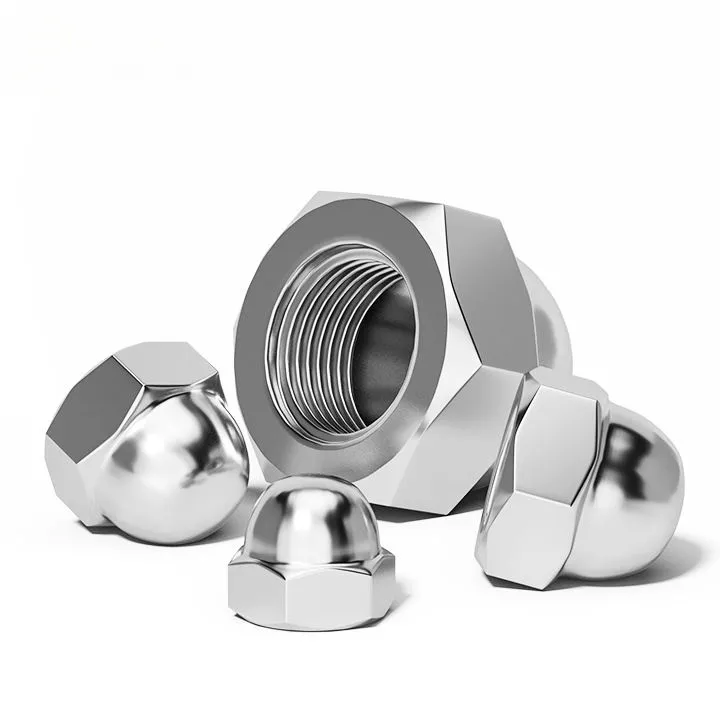
Cap Nut OEM RFQ Callouts
OEM buyers who only write “cap nut” or “acorn nut” on finish BOMs often get dual quotes: one desk assumes a domed closed-end cap / acorn nut that covers the bolt tip, another substitutes a wing nut, lock nut, square nut, flange nut, tee nut, cage nut, coupling nut, weld nut, clinch nut, castle nut, or jam nut. This Ruike (Ningbo Hongyuan Precision Hardware Manufacturing Co., Ltd. / HY) guide locks cap nut OEM RFQ callouts in buyer English. It complements—not replaces—the sibling wing nut OEM RFQ, the square nut OEM RFQ, the flange nut OEM RFQ, the tee nut OEM RFQ, the cage nut OEM RFQ, the coupling nut OEM RFQ, the weld nut OEM RFQ, the clinch nut OEM RFQ, the rivet nut OEM RFQ, the self-clinching nut OEM RFQ, the threaded rod OEM RFQ, the stud bolt OEM RFQ, and the blind rivet OEM RFQ.
Plant context: About Us. Browse related hardware under nuts. Hub index: Guides. Industry context: Applications. General RFQ questions: FAQ.
What should an OEM RFQ freeze for a cap nut?
A cap-nut RFQ must freeze cap / acorn / dome style, overall height, hex size across flats, thread series, and material/finish—so buyers cannot silent-swap a wing nut, lock nut, square nut, flange nut, tee nut, cage nut, coupling nut, or jam nut. Name “cap / acorn nut”; attach PDF/STEP and open Get a Quote on one enquiry thread.
What a cap nut means on an HY RFQ
A cap nut (also called an acorn nut or dome nut) is a nut with a closed, domed end that covers the protruding bolt tip for appearance and safety. Buyers name cap / acorn / dome style, overall height, hex size across flats, thread series and class, and material/finish. It is not a wing / butterfly nut with hand ears, not a lock nut with prevailing-torque or nylon-insert locking, not a square / four-sided nut for channel fit, not a flange / serrated flange nut with an integrated washer flange, not a tee / T-nut with prongs into wood, not a cage / clip-on nut that floats in a square panel hole, not a coupling / extension nut that joins two male threads, not a weld or clinch / self-clinching nut for permanent sheet retention, and not a castle nut or jam nut unless the Rev explicitly owns those forms. Use this page when the RFQ language is “cap nut / acorn nut / dome nut”; use the wing nut OEM RFQ, square nut OEM RFQ, flange nut OEM RFQ, tee nut OEM RFQ, cage nut OEM RFQ, or coupling nut OEM RFQ when the drawing owns those families.
When OEM drawings should freeze cap-nut geometry
- Finished assemblies that need a closed dome covering the bolt tip for appearance or finger safety.
- BOMs that previously received wing, lock, square, flange, tee, cage, coupling, weld, clinch, castle, or jam nuts when engineering needed a capped dome.
- Programs that mix “cap nut / acorn / dome” language with anonymous “cover nut” or scrap-hex lines.
- Jobs that still need mating bolt engagement—see also how to measure screw length.
Cap / acorn vs wing / lock / jam — RFQ comparison
| Callout | Cap / acorn nut (this page) | Wing / lock / other path |
|---|---|---|
| Buyer language | Cap nut · acorn nut · dome nut | Wing / butterfly · lock / nyloc · square · flange · tee · cage · coupling · weld / clinch · castle · jam |
| Function | Closed dome covers bolt tip | Hand ears · prevailing lock · four flats · washer flange · prongs · cage float · rod join · permanent retention · cotter slots · thin lock |
| Key callouts | Dome/overall height, hex A/F, thread, material | Ear span · insert/prevailing class · A/F/thickness · flange Ø · prongs/host · cage/square hole |
| Typical mix-up | “Cover nut” without dome height or A/F | Silent swap to wing, lock, square, flange, castle, or jam |
Callouts that keep cap-nut intent clear
- Family — cap nut / acorn nut / dome nut—not “wing similar,” “lock any,” “castle any,” or “jam any.”
- Dome / height — overall height and closed-end form as on the Rev.
- Hex size — across-flats (A/F) for wrenching.
- Thread — series and class for the mating bolt as on the Rev.
- Material / finish — named for the nut body; finish does not invent dome height.
Cross-reference pitfalls
Do not treat cap nuts as drop-in wing nuts, lock nuts, square nuts, flange nuts, tee nuts, cage nuts, coupling nuts, weld nuts, clinch nuts, castle nuts, or jam nuts. Do not assume an open hex or thin jam meets a closed-dome drawing. Dome / overall height and hex A/F stay on the RFQ with the thread callout. For hand-tight ears see the wing nut OEM RFQ; for four-sided channel fit see the square nut OEM RFQ; for flanged hex see the flange nut OEM RFQ; for pronged wood inserts see the tee nut OEM RFQ; for floating panel anchors see the cage nut OEM RFQ; for rod joiners see the coupling nut OEM RFQ; for welded or press-in retention see the weld nut OEM RFQ and clinch nut OEM RFQ.
What to send with the RFQ
Attach the controlling PDF/STEP, name cap / acorn / dome intent, overall height, hex size across flats, thread series and class, material/finish, qty band, and destination. Open Get a Quote so one enquiry thread owns the revision. Ruike will not invent ISO certificates, MOQ tables, or lead-time promises on this public page.
FAQ — cap nut OEM RFQ
What is a cap nut on an OEM RFQ?
It is a nut with a closed, domed end that covers the protruding bolt tip for appearance and safety. Freeze cap / acorn / dome style, overall height, hex A/F, thread, and material—do not stop at “cap nut,” “acorn nut,” or “cover nut.”
How does a cap nut differ from a wing nut, lock nut, or jam nut?
A cap nut freezes a closed dome covering the bolt tip. A wing nut uses hand ears; a lock nut owns prevailing-torque or nylon-insert locking; a jam nut is a thin lock without a dome. Use the wing nut OEM RFQ when the drawing owns hand ears—do not duplicate the same RFQ on both pages.
Is an acorn / dome nut the same as a cap nut?
Often yes in buyer language, but not by default across every Rev. Freeze overall height and closed-end form the drawing owns. If the BOM says “wing,” “lock,” “square,” “flange,” “castle,” or “jam,” follow those OEM RFQ pages instead.
How should dome height and hex size be called out?
State overall height, hex size across flats, thread series and class, and material/finish. For mating bolt engagement length, see how to measure screw length.
What should I send so Ruike can quote cap nuts?
Send PDF/STEP, cap / acorn / dome style, overall height, hex A/F, thread series, material/finish, qty band, and destination via Get a Quote. Ruike does not invent ISO certs, MOQ, or lead times on your behalf.