

304 vs 316 for Marine Fasteners: What to Specify Before You Say “Marine Stainless”
Before you RFQ “marine stainless,” write the grade (commonly 304/A2 vs 316/A4), finish, any isolation from dissimilar metals, and the exposure you actually expect—splash, continuous wet, coastal air, or enclosed cabin.

Automotive & EV Fastener Drawing RFQ: What to Put on the Print Before Quote
Before quoting an automotive or EV fastener, put material, finish, thread designation, length under head, head and drive, any coating thickness window, and mating-part conditions on the print.

Furniture Screw RFQ Checklist: Head, Drive, and Plastic vs Wood Substrate
Before you send a furniture screw RFQ, name the head geometry, drive system, engagement length, material or finish, and the host substrate—wood, plastic, sheet metal, or a threaded insert.
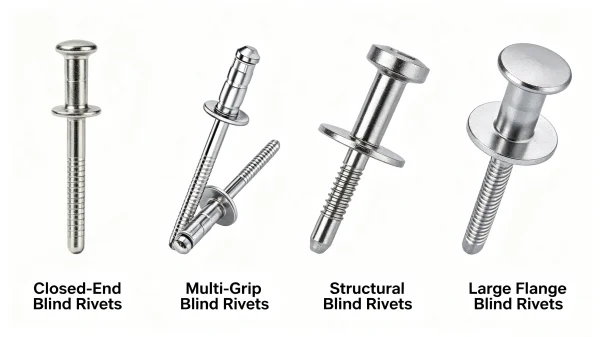
Blind Rivet Grip Range: Check the Whole Stack Tolerance
Choose a blind rivet whose published grip range covers the complete thickness interval of the assembled joint, not just its nominal thickness.

Stainless Fastener OEM RFQ — Delta Fields Only
Use this checklist before you send a drawing or request a quote for stainless fasteners—clear inputs shorten review time and reduce mismatched samples.

Set Screw Point Selection: Match the Tip to the Mating Surface
Set screw point selection starts at the contact surface, not at the hex socket. The working end controls how the screw meets the shaft or component, while the thread and drive control installation.

Countersink vs Counterbore: Match the Screw Head to the Seat
A countersink has a conical seat; a counterbore has an enlarged cylindrical recess with a flat bottom. Choosing between them starts with the screw’s bearing shape and the space available in the component.

Flange Bolt vs Bolt and Washer: Check the Bearing Interface
A flange bolt and a bolt with a separate washer can both provide a broader bearing interface, but they are not interchangeable solely because their outside diameters look similar.

Shoulder Screw Dimensions: Check the Shoulder, Thread and Clearance
Shoulder screw dimensions should describe the smooth shoulder and the threaded end separately. A thread designation alone does not tell you the shoulder diameter, its usable length or the clearance available to a moving component.