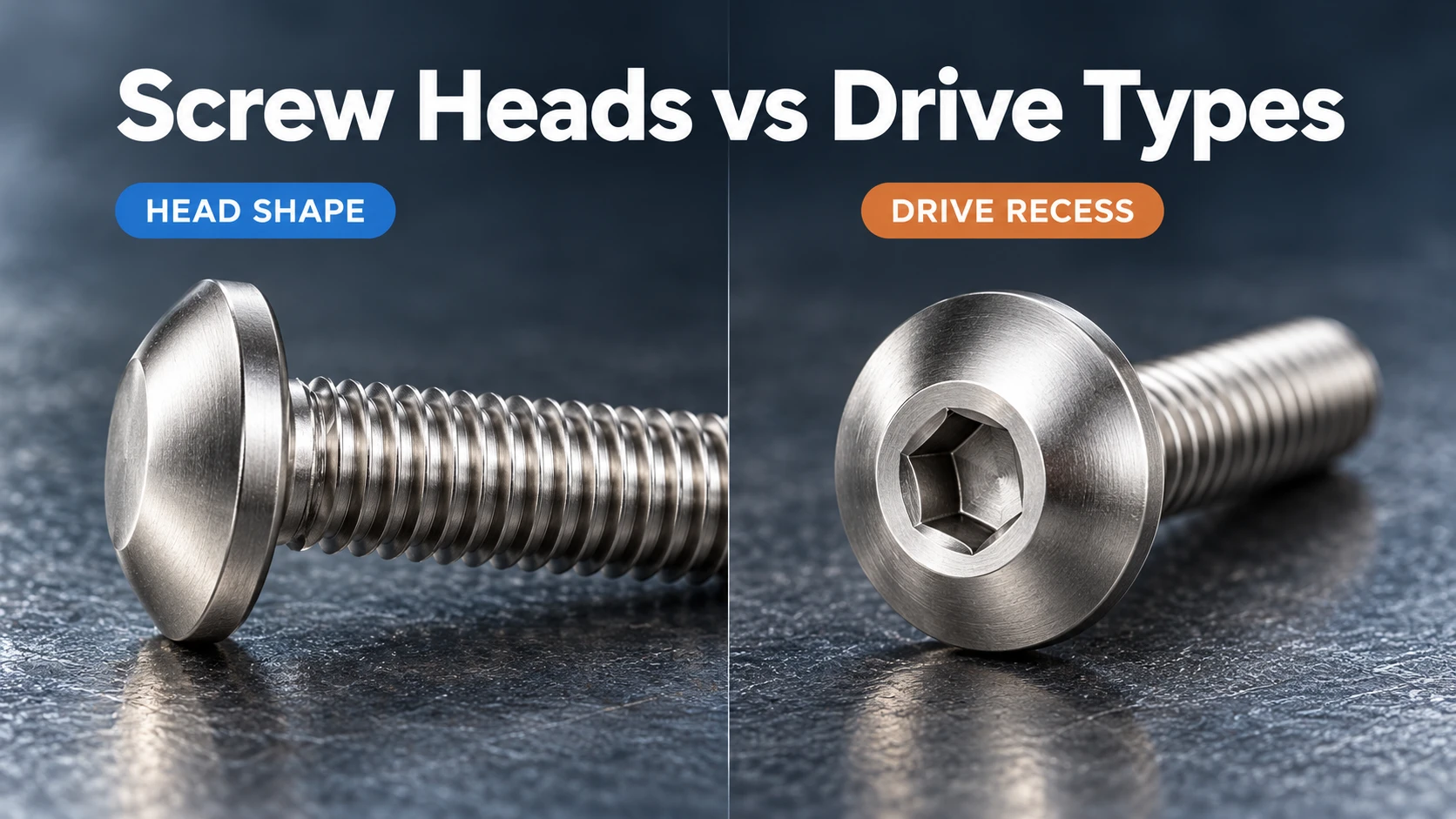
Socket Head vs Hex Head Bolt RFQ Callouts
OEM bolt RFQs often say only “hex bolt” or “Allen bolt” when engineering froze a socket-head cap screw (SHCS) or an external hex-head bolt—or a socket head appears where wrench access and washer practice already require a hex head. Purchasing then sees dual quotes on head height, drive tooling, and washer packages. This guide locks socket head cap screw vs hex head bolt callouts on RFQ drawings before you send a print to Ruike (Ningbo Hongyuan Precision Hardware Manufacturing Co., Ltd. / HY). It complements—not replaces—the flange bolts vs hex head RFQ guide, the hex bolts OEM selection notes, the screw head types vs drive types guide, and the bolt grades OEM buyer checklist.
Plant context: About Us. Browse related hardware under bolts, screws, and nuts. General RFQ questions: FAQ.
What “socket head” vs “hex head” means on a buyer print
A socket-head cap screw typically presents a cylindrical head with an internal drive recess (commonly hex socket) and is often seated in a counterbore. A hex-head bolt presents an external hex for wrench or socket tooling and commonly pairs with a washer or seating face called out on the print. Both can share the same thread and property class, but they are not interchangeable on head height, bearing area, drive tool, or clearance.
On RFQs, Ruike prices the head style you name. If the PDF shows a cylindrical socket head but the BOM line says only “M10 hex bolt,” vendors will guess—and two quotes will diverge on head geometry, drive, and whether a washer is even allowed. Catalog slang still needs a product standard or drawing note before it becomes a purchasable line item.
When OEM drawings should prefer a socket-head cap screw
Prefer an explicit socket-head cap screw callout when external wrench swing is blocked; a counterbore or pocket needs a low-profile cylindrical head; internal hex (or named alternate drive) is already frozen on the AVL; or the assembly sequence relies on Allen/hex-key tooling rather than open-end wrenches. Socket heads also fit buyers who want a compact underhead bearing without adding a separate washer line—when the print accepts that bearing geometry.
Drawing notes that reduce resubmits
- Name the style: socket-head cap screw (or buyer standard / ISO 4762 / ASME B18.3 callout) vs hex-head bolt as distinct lines.
- State drive recess (hex socket size or named alternate) when the head is socket type.
- Call counterbore / pocket / clearance when the head must sit flush or below a cover.
- Keep thread system, property class / alloy, and finish on their own lines—do not replace them with “Allen bolt OK.”
- Say whether underhead fillet or bearing diameter is controlled on the Rev.
When a hex-head bolt is the clearer RFQ path
Keep a hex-head bolt when external wrenching is the plant standard; when washer stacks, large bearing area, or flange-washer packages are required; when long-bolt or structural install practices already freeze hex heads; or when maintenance crews stock only hex sockets/wrenches. Hex heads still need length, thread, and washer notes—pair the head callout with washer yes/no and lubrication condition on the same Rev when torque matters.
- Head geometry — external hex; width across flats if critical.
- Washer / flange — plain washer, hardened washer, or none; do not imply flange when the part is plain hex.
- Wrench access — swing clearance or tool type if the joint is tight.
- Torque / lube — seating torque with dry vs lubricated on the same note when controlled.
Drive, underhead, and washer notes — keep lines distinct
Socket-head callouts must separate head geometry from drive recess; hex-head callouts must separate the hex from any washer or flange package. Do not bury head style inside a free-text “use Allen bolt or hex” note next to an A2/A4 bolt line. Galling controls, passivation, and assembly lube remain separate callouts—head style does not replace alloy, finish, or anti-galling intent on mating stainless threads.
Callouts that keep quotes aligned
- Head-style line: socket-head cap screw vs hex-head bolt (standard or drawing Rev).
- Drive: hex socket (or named alternate) only when the head is socket type.
- Washer / flange intent for hex-head packages.
- Counterbore / clearance when socket heads sit in pockets.
- Alloy / property class / thread system on their own lines.
- Finish / passivation / coating only if print-required.
- Torque or preload with lubrication when the joint is torque-controlled.
Side-by-side: RFQ field set for socket-head vs hex-head fasteners
Use this field set whether you freeze a socket-head cap screw or a hex-head bolt:
- Head style — socket-head cap screw vs hex-head bolt (standard or drawing).
- Drive — hex socket size / named recess for SHCS; N/A for external hex.
- Underhead / bearing — fillet, bearing diameter, or washer face notes when controlled.
- Washer / flange — required, optional, or forbidden; flange only if the part is flanged.
- Clearance — counterbore, pocket, or wrench swing.
- Alloy / material — carbon, alloy, or A2/A4 (or buyer alloy); property class on its own line.
- Thread system — metric or UNC/UNF; pitch and class of fit if controlled.
- Length / grip — overall length datum and usable thread vs grip when critical.
- Standard or drawing — ISO/DIN/ASME or buyer part number or drawing Rev + critical dims.
- Torque or preload — with lube condition when install is torque-controlled.
- Surface process — plating / passivation / coating only if required.
- Qty + ship window — annual/batch and buyer-stated target date (no invented MOQ/lead time).
Common RFQ mistakes that trigger dual quotes
- BOM “M8 hex bolt” with a cylindrical socket head visible on the PDF and an external-hex note in the title block.
- “Allen bolt or equivalent” without head standard, drive size, or approved-alternate list.
- Copying a hex-head washer stack onto a socket-head line without stating washer intent.
- Stainless bolt + unspecified head with no galling or finish note on the fastener line.
- Missing drawing Rev so vendors quote different head heights and drive recesses from memory.
Clearance, tooling, and vibration — do not mix styles silently
Socket-head and hex-head fasteners change tool access, underhead bearing, and how washers enter the stack. If the joint is vibration-critical or torque-controlled, freeze the head style on the same Rev as the torque or preload note, and say whether a secondary locking method (lock washer, adhesive, safety wire) is still required. Silent socket↔hex swaps shift fit-up and retention—the dual-quote and field-callback pattern this guide targets.
Global BOM owners should freeze whether alternate plants may swap head styles. List approved alternates with clearance and washer notes, or mark “no socket/hex head substitute.”
Soft CTA: drawing review before you freeze the BOM
Ruike quotes named head style, drive, and related washer notes after manufacturability review. If your print still says only “hex / Allen bolt optional,” send the PDF/STEP for a short drawing review so the quote package locks socket-head vs hex-head intent with clearance and washer notes. Typical drawing reviews aim for a clear quote path within about 12 hours of a complete package (buyer-stated; not a contractual SLA).
Submit at Get a Quote or Contact. Related reading: flange bolts vs hex head, hex bolts OEM selection, head types vs drive types, nylon-insert vs prevailing-torque, bolt grades, and the site FAQ.
Frequently asked questions — socket head vs hex head bolt on RFQ drawings
When should an RFQ call a socket-head cap screw instead of a hex-head bolt?
Call a socket-head cap screw (SHCS) when the joint needs a cylindrical head with an internal drive (typically hex socket), limited external wrench swing, or a counterbore pocket. Prefer a hex-head bolt when external wrenching, washer stacks, or long-bolt/structural install practices already freeze a hex head on the AVL.
Is “Allen bolt” the same as a hex-head bolt on a drawing?
No. Catalog slang (“Allen bolt,” “socket bolt,” “hex bolt”) mixes drive recess with head geometry. A socket-head cap screw usually has a cylindrical head and internal hex drive; a hex-head bolt has an external hex for wrenching. Vendors will quote different head height, underhead fillet, and washer packages if the print is vague.
What head, drive, and washer notes belong on the RFQ drawing?
State head style (socket-head cap vs hex head), drive recess if socket, whether a washer or flange is required with the hex head, underhead bearing/fillet notes when seating surface is controlled, and wrench or counterbore clearance. Keep thread system, property class/alloy, and finish on their own lines.
Can suppliers freely substitute socket-head for hex-head fasteners?
Only with a buyer ECO or approved alternate. Head height, bearing area, drive tool, washer need, and torque feel all change. Silent substitution is a top dual-quote and fit-up risk. Lock the head style the joint was designed for, then list approved alternates if any.
What should I send so Ruike can quote socket-head vs hex-head bolts?
Send PDF/STEP or approved sample path, head style (socket-head cap screw vs hex-head bolt), drive if socket, thread system and length/grip, alloy/property class, washer/flange intent, finish if required, annual/batch qty, and buyer-stated ship window. Use Get a Quote—Ruike does not invent ISO certs, MOQ, or lead times on your behalf.
Related standard note: when the print owns socket-cap geometry, freeze DIN 912 socket-cap OEM RFQ callouts (or ISO 4762 if dual-listed) instead of a vague “socket bolt” line.