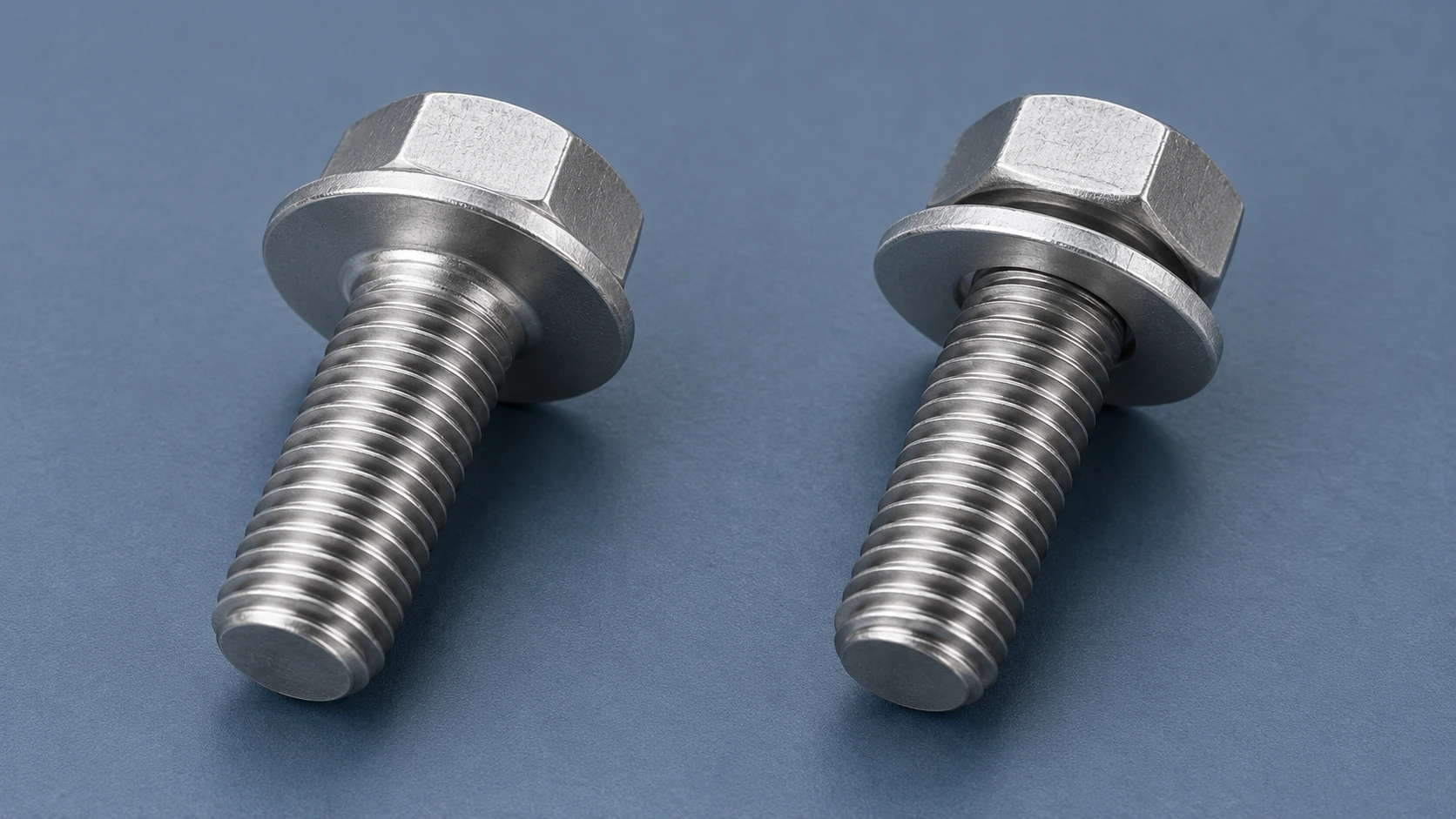
Flange Bolts vs Hex Head on RFQ Drawings
OEM bolted-joint RFQs often say “hex bolt” when the joint was designed around an integral flange bearing face—or the reverse: a flange bolt is sketched where engineering still needs a separate hard washer. Purchasing then receives dual quotes for different stack heights and underhead geometries. This guide helps buyers lock flange bolts vs hex head (plus washer) callouts on RFQ drawings before you send a print to Ruike (Ningbo Hongyuan Precision Hardware Manufacturing Co., Ltd. / HY). It complements—not replaces—the hex bolts OEM selection guide, the flange bolt vs bolt and washer bearing-interface article, the plain washer selection notes, and the torque vs preload vs proof load RFQ guide.
Plant context: About Us. Browse related hardware under bolts, nuts, and screws. General RFQ questions: FAQ.
What “flange bolt” vs “hex head” means on a buyer print
A hex head bolt is the classic six-sided head; bearing support usually comes from a separate plain or hardened washer (or from the joint face alone when the print allows). A flange bolt (often called a hex flange bolt) carries an integral washer-like flange under the head so the bearing diameter is part of the fastener. Catalog slang (“flange hex,” “washer head,” “captive washer”) is not a substitute for a product standard or a drawing view that shows the underhead.
On RFQs, Ruike prices the geometry you name. If the PDF shows a flanged underhead but the BOM line says only “M10 hex,” vendors will guess—and two quotes will diverge on flange OD, serration, and overall length under head.
When OEM drawings should prefer a flange bolt
Prefer an explicit flange-bolt callout when any of these are true on the package: the joint needs a one-piece bearing face for assembly speed or lost-washer risk; stack height is controlled without a loose washer; serrated flange is required for painted or coated panels per buyer standard; sealing or underhead geometry is owned by the fastener; or prior field issues showed washers omitted on the line.
Drawing notes that reduce resubmits
- Name the style: hex flange bolt (or buyer standard number) vs hex bolt + washer as two line items.
- If flanged, state plain vs serrated flange when it matters to paint, torque scatter, or appearance.
- Call flange OD / bearing diameter when the joint face is narrow or the print controls imprint.
- Keep thread length, grip, and overall length datums consistent with how length is measured for that head style.
- Do not replace property class, alloy, or thread system with a head-style slogan.
When hex head plus washer is the clearer RFQ path
Keep hex head and washer separate when washer hardness, OD, ID, or material must differ from the bolt (for example hardened washer under a stainless hex), when the AVL already stocks washers as commodities, or when maintenance must replace washers independently. The bearing-interface logic in the flange-vs-bolt-and-washer article still applies: the print owns whether the clamp face is the flange, the washer, or the joint material.
- Washer line — type, hardness, dimensions, and quantity per joint.
- Hex line — width across flats, head height, underhead fillet if controlled.
- Stack — total clamped thickness vs usable thread (see engagement vs grip guide when critical).
- Torque / lube — underhead friction changes with flange vs washer; keep condition with the torque figure.
Standards, serration, and stainless notes — keep lines distinct
ISO/DIN/ASME flange-hex product standards are not interchangeable with a generic “hex + washer” BOM. Serrated flanges mark paint and change friction; plain flanges behave differently under the same torque table. For stainless packages, galling and passivation notes remain separate callouts—head style does not replace alloy, finish, or assembly-lube intent.
Callouts that keep quotes aligned
- Head-style line: flange bolt vs hex head (standard or drawing Rev).
- Flange detail: plain / serrated; OD if critical.
- Washer line: only if the joint still uses a separate washer.
- Alloy / property class / thread system on their own lines.
- Finish / passivation / coating only if print-required.
- Torque or preload with lubrication and underhead condition when controlled.
Side-by-side: RFQ field set for flange vs hex-head bolts
Use this field set whether you freeze a flange bolt or a hex-plus-washer package:
- Head style — hex flange bolt vs hex bolt (+ washer yes/no).
- Flange / bearing — plain or serrated; OD / bearing diameter if critical.
- Washer — type, hardness, dims when separate.
- Alloy / material — A2/A4 or buyer alloy; property class on its own line.
- Thread system — metric or UNC/UNF; pitch and length datum for the head style.
- Standard or drawing — ISO/DIN/ASME callout or drawing Rev + critical dims.
- Torque or preload — with lube / underhead condition when torque-controlled.
- Surface process — passivation / coating only if required.
- Qty + ship window — annual/batch and buyer-stated target date (no invented MOQ or factory lead-time marketing).
Common RFQ mistakes that trigger dual quotes
- BOM “M12 hex” with a flanged underhead on the PDF view.
- “Flange bolt OK as alternate” without ECO, stack check, or serration note.
- Omitting washer hardness when substituting away from an integral flange.
- Copying a dry-torque table after changing underhead friction (flange vs washer).
- Missing drawing Rev so vendors quote different flange ODs from memory.
Length datum and stack height — do not mix head styles silently
Length callouts change meaning when you move between hex head and flange head. Underhead datum, overall length, and usable thread must match the product standard or the drawing view. A flange adds axial stack under the head; dropping a loose washer when switching to a flange bolt (or adding one when switching away) shifts clamp length and may steal thread engagement. Cross-check grip vs engagement on the same Rev before releasing the RFQ package, especially on short grips and fine-pitch stainless joints where preload and galling controls already sit on the print.
Distributor and OEM buyers sharing one global BOM should also freeze whether alternate plants may use flange bolts as logistics substitutes. If alternates are allowed, list them with stack and torque notes; if not, say “no flange substitute” on the head-style line so quotes stay single-path.
Soft CTA: drawing review before you freeze the BOM
Ruike quotes named head style, washer package, and underhead geometry after manufacturability review. If your print still says only “hex / flange optional,” send the PDF/STEP for a short drawing review so the quote package locks flange vs hex-head intent with washer and torque notes. Typical drawing reviews aim for a clear quote path within about 12 hours of a complete package (buyer-stated; not a contractual SLA).
Submit at Get a Quote or Contact. Related reading: hex bolts OEM selection, flange bolt vs bolt and washer, plain washer selection, torque vs preload vs proof load, engagement vs grip, stainless galling prevention, and the site FAQ.
Frequently asked questions — flange bolts vs hex head on RFQ drawings
When should an RFQ call a flange bolt instead of hex head plus washer?
Call a flange bolt (integral washer-face under the head) when the print owns a one-piece bearing face, stack height, or sealing/underhead geometry that a loose washer cannot guarantee. Prefer hex head + named washer when washer hardness, OD, or material must differ from the bolt, or when the buyer’s AVL stocks separate washers.
Is a flange bolt the same as a hex bolt with a captive washer?
Not always. An integral flange is forged or formed with the head; captive/assembled washers are separate parts retained on the shank. RFQs must name the product style and any standard (for example ISO flange hex vs buyer drawing). Do not let catalog slang collapse the two—vendors will quote different geometries.
What underhead and bearing-face notes belong on the drawing?
State flange OD / bearing diameter when critical, whether the flange is serrated or plain, underhead fillet or radius if print-controlled, and whether a separate washer is still required. Keep hex width across flats and head height on their own lines. Do not bury bearing-face intent inside a free-text “hex flange OK” note.
Can suppliers freely substitute flange bolts for hex-plus-washer packages?
Only with a buyer ECO or approved alternate. Stack height, clamp face, serration marks on painted panels, and washer hardness all change. Silent substitution is a top dual-quote and field-fit risk. Lock the head style the joint was designed for, then list approved alternates if any.
What should I send so Ruike can quote flange vs hex-head bolts?
Send PDF/STEP or approved sample path, head style (flange vs hex), any washer callout, thread system and length, alloy/property class, surface process if required, annual/batch qty, and buyer-stated ship window. Use Get a Quote—Ruike does not invent ISO certs, MOQ, or lead times on your behalf.
Related head/anti-rotation geometry: for round head + square neck (not flange or hex), freeze carriage bolt OEM RFQ callouts.