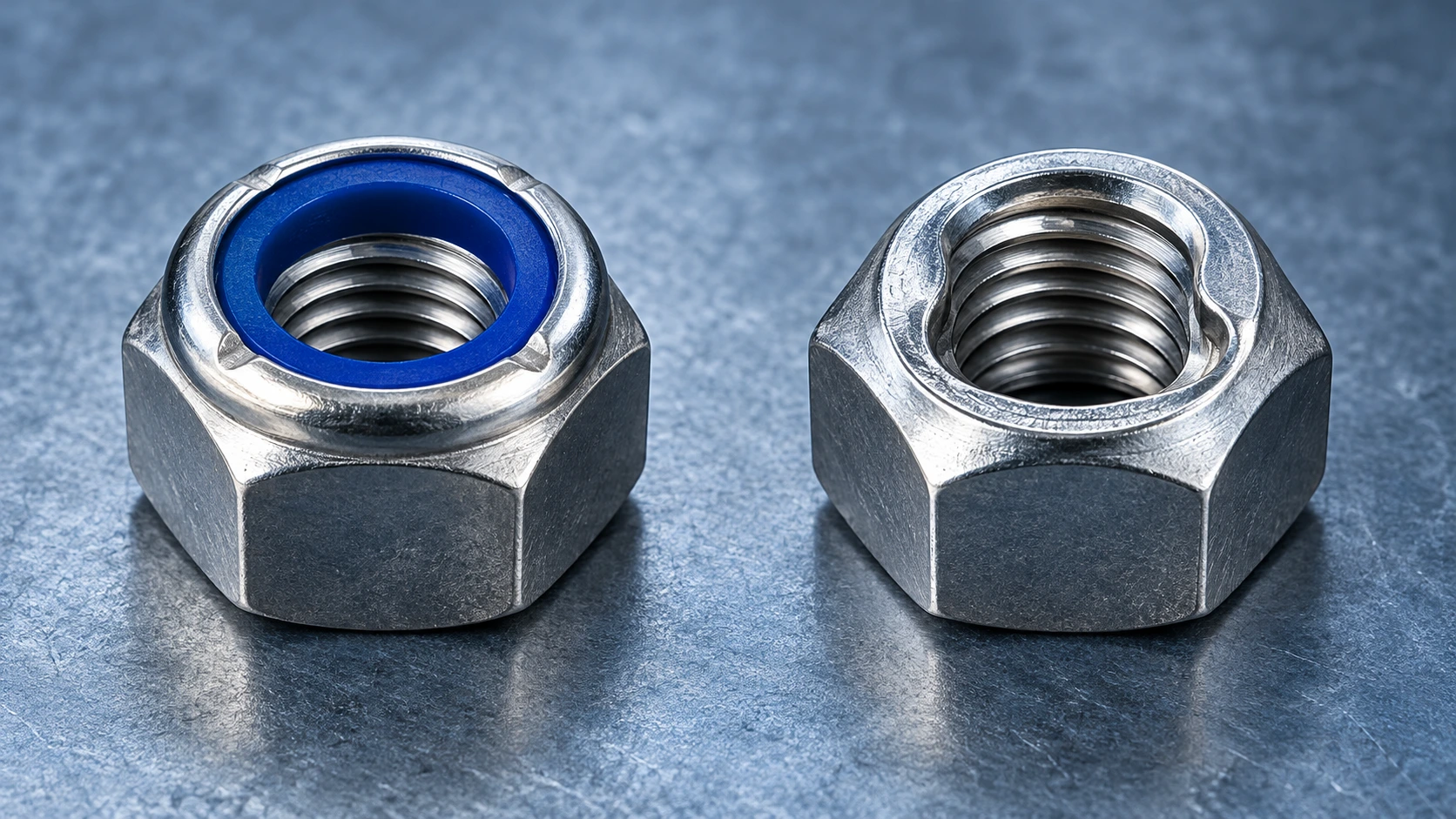
Nylon-Insert vs Prevailing-Torque Lock Nut RFQ
OEM nut RFQs often say only “lock nut” when engineering froze a nylon-insert (nyloc) collar or an all-metal prevailing-torque feature—or a nyloc appears where heat or reuse already rules out polymer. Purchasing then sees dual quotes on temperature limits and seating-torque scatter. This guide locks nylon-insert vs prevailing-torque lock nut callouts on RFQ drawings before you send a print to Ruike (Ningbo Hongyuan Precision Hardware Manufacturing Co., Ltd. / HY). It complements—not replaces—the torque vs preload vs proof load RFQ guide, the stainless galling prevention notes, the thread engagement vs grip length guide, and the bolt grades OEM buyer checklist.
Plant context: About Us. Browse related hardware under nuts, bolts, and screws. General RFQ questions: FAQ.
What “nylon-insert” vs “prevailing-torque” means on a buyer print
A nylon-insert lock nut (often called nyloc) develops prevailing torque through a polymer collar that grips the bolt thread after the insert is engaged. An all-metal prevailing-torque lock nut uses metal locking features—distorted threads, beams, or similar—to create prevailing torque without a polymer. Both resist vibration better than a plain nut, but they are not interchangeable on temperature, reuse, corrosion pairing, or torque-to-seat.
On RFQs, Ruike prices the locking style you name. If the PDF shows a nylon ring but the BOM line says only “M10 lock nut,” vendors will guess—and two quotes will diverge on insert grade, nut height, and whether an all-metal alternate is even allowed. Catalog slang still needs a product standard or drawing note before it becomes a purchasable line item.
When OEM drawings should prefer a nylon-insert lock nut
Prefer an explicit nylon-insert callout when service temperature stays in the polymer’s rated band (buyer-stated; not bake ovens); vibration resistance needs a common nyloc style; limited reuse is acceptable; or the AVL already freezes nylon-insert nuts. They also fit buyers who want a commercial style without proprietary all-metal locking geometry.
Drawing notes that reduce resubmits
- Name the style: nylon-insert lock nut (or buyer standard / DIN/ISO nyloc callout) vs all-metal prevailing-torque as distinct lines.
- State nut height/style (regular, thin/jam, flange) when the stack or wrench access is controlled.
- Call temperature or process notes when paint bake, wash, or nearby heat sources could affect the insert.
- Keep thread system, property class / alloy, and finish on their own lines—do not replace them with “nyloc OK.”
- Say whether limited reuse is allowed or the nut is treated as single-install per buyer policy.
When all-metal prevailing-torque is the clearer RFQ path
Keep an all-metal prevailing-torque nut when the joint sees elevated temperature, solvents, or radiation that would degrade nylon; when the maintenance plan requires many on/off cycles beyond the polymer’s reuse guidance; when buyer aerospace/auto standards already name a metal locking feature; or when corrosion and alloy pairing must stay all-metal with no polymer crevice. Prevailing torque still affects installation feel and seating—pair torque tables with the locking style and lubrication condition on the same Rev.
- Locking feature — distorted thread, beam, or named product standard (not “lock nut” alone).
- Nut geometry — height, flange yes/no, wrenching size.
- Reuse / re-torque — buyer rule for how many times the nut may be reinstalled.
- Torque / lube — prevailing torque plus seating torque; keep dry vs lubricated with the figure.
Temperature, chemicals, and stainless notes — keep lines distinct
Nylon-insert performance is temperature- and chemistry-sensitive; all-metal styles trade that for different galling and corrosion behavior on stainless packages. Do not bury locking style inside a free-text “use lock nut” note next to an A2/A4 bolt line. Galling controls, passivation, and assembly lube remain separate callouts—locking style does not replace alloy, finish, or anti-galling intent on mating stainless threads. On stainless nut/bolt pairs, state whether lube or another galling control applies at install besides the locking feature.
Callouts that keep quotes aligned
- Locking-style line: nylon-insert vs all-metal prevailing-torque (standard or drawing Rev).
- Temperature / process: bake, wash, continuous service band when nylon is considered.
- Reuse policy: single-use vs limited-reuse with buyer rule.
- Alloy / property class / thread system on their own lines.
- Finish / passivation / coating only if print-required.
- Torque or preload with lubrication and whether prevailing torque is included in the install procedure.
Side-by-side: RFQ field set for nylon-insert vs prevailing-torque nuts
Use this field set whether you freeze a nylon-insert or an all-metal prevailing-torque nut:
- Locking style — nylon-insert (nyloc) vs all-metal prevailing-torque (feature or standard).
- Nut style / height — regular, thin, flange; width across flats if critical.
- Temperature / chemistry — service band and process exposures when polymer is in play.
- Reuse — single-install or limited-reuse per buyer maintenance rule.
- Alloy / material — carbon, alloy, or A2/A4 (or buyer alloy); property class on its own line.
- Thread system — metric or UNC/UNF; pitch and class of fit if controlled.
- Standard or drawing — ISO/DIN/ASME or buyer part number or drawing Rev + critical dims.
- Torque or preload — with lube condition and how prevailing torque is handled at install.
- Surface process — plating / passivation / coating only if required.
- Qty + ship window — annual/batch and buyer-stated target date (no invented MOQ/lead time).
Common RFQ mistakes that trigger dual quotes
- BOM “M8 lock nut” with a nylon ring visible on the PDF but an all-metal stover-style note in the title block.
- “Nyloc or equivalent” without temperature, reuse, or approved-alternate list.
- Copying a plain-nut torque table onto a prevailing-torque nut without stating dry/lube and whether prevailing is included.
- Stainless bolt + unspecified lock nut with no galling or finish note on the nut line.
- Missing drawing Rev so vendors quote different nut heights and insert grades from memory.
Prevailing torque, seating, and vibration — do not mix styles silently
Prevailing-torque nuts change the torque-angle path versus a plain nut: you feel running torque before the nut seats, then add seating torque to build clamp. Nylon-insert and all-metal features produce different scatter and reuse fade. If the joint is vibration-critical, freeze the locking style on the same Rev as the torque or preload note, and say whether a secondary locking method (safety wire, adhesive, serrated flange) is still required. Silent nylon↔metal swaps shift install feel and retention—the dual-quote and field-callback pattern this guide targets.
Global BOM owners should freeze whether alternate plants may swap locking styles. List approved alternates with temperature/reuse notes, or mark “no nylon/metal lock substitute.”
Soft CTA: drawing review before you freeze the BOM
Ruike quotes named locking style, nut geometry, and related torque notes after manufacturability review. If your print still says only “lock nut / nyloc optional,” send the PDF/STEP for a short drawing review so the quote package locks nylon-insert vs prevailing-torque intent with temperature and reuse notes. Typical drawing reviews aim for a clear quote path within about 12 hours of a complete package (buyer-stated; not a contractual SLA).
Submit at Get a Quote or Contact. Related reading: torque vs preload vs proof load, stainless galling prevention, engagement vs grip, flange bolts vs hex head, bolt grades, and the site FAQ.
Frequently asked questions — nylon-insert vs prevailing-torque lock nuts on RFQ drawings
When should an RFQ call a nylon-insert lock nut instead of prevailing-torque?
Call a nylon-insert (nyloc) lock nut when the joint needs a polymer collar for vibration resistance at moderate temperature, and reuse is limited or controlled. Prefer an all-metal prevailing-torque lock nut when heat, chemicals, or repeated removals would damage a nylon collar, or when the buyer standard already freezes metal locking features.
Is “nyloc” the same as any prevailing-torque nut on a drawing?
No. Nylon-insert nuts develop prevailing torque through a polymer collar; all-metal prevailing-torque nuts use deformed threads, beams, or similar metal features. Catalog slang (“lock nut,” “stover,” “nyloc”) is not a substitute for the product style and standard. Vendors will quote different temperature limits and reuse rules if the print is vague.
What temperature and reuse notes belong on the RFQ drawing?
State the expected service temperature band when nylon is considered, whether the nut is single-use or limited-reuse per buyer rule, and any bake, paint, or wash process that could soften or contaminate the insert. For all-metal styles, note whether distorted-thread or other metal locking is required and if re-torque after seating is allowed.
Can suppliers freely substitute nylon-insert for all-metal prevailing-torque nuts?
Only with a buyer ECO or approved alternate. Temperature capability, reuse, seating torque scatter, and corrosion pairs all change. Silent substitution is a top dual-quote and field-failure risk. Lock the locking style the joint was designed for, then list approved alternates if any.
What should I send so Ruike can quote nylon-insert vs prevailing-torque nuts?
Send PDF/STEP or approved sample path, locking style (nylon-insert vs all-metal prevailing-torque), thread system and height/style, alloy/property class, finish if required, temperature/reuse notes, annual/batch qty, and buyer-stated ship window. Use Get a Quote—Ruike does not invent ISO certs, MOQ, or lead times on your behalf.
When the BOM needs a named metric nylon-insert hex nut (not only nylon-insert vs all-metal), freeze DIN 985 nyloc-nut OEM RFQ callouts on a separate line.