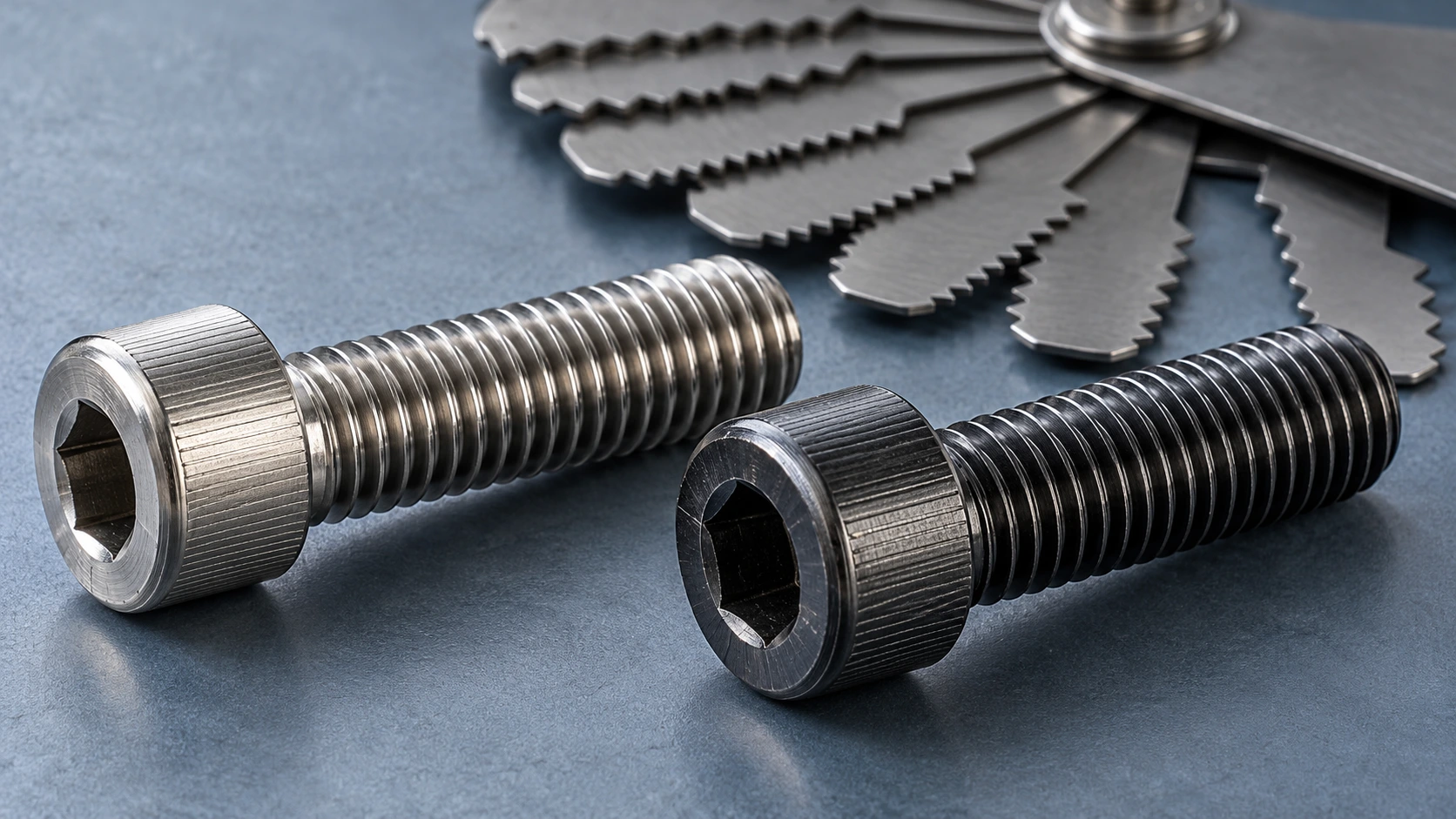
Metric vs Inch Fastener RFQ Drawing Callouts
Global OEM BOMs often mix metric (ISO/DIN · M-series · mm pitch) and inch / imperial (UNC/UNF · Unified · TPI) callouts on the same stainless fastener package—or a PDF says “M10 or 3/8 OK” when engineering already froze one thread system. Purchasing then sees dual quotes on pitch/TPI, length datum, nut/washer mates, and tap drill. This guide locks metric vs inch fastener RFQ drawing callouts before you send a print to Ruike (Ningbo Hongyuan Precision Hardware Manufacturing Co., Ltd. / HY). It complements—not replaces—the metric vs imperial fasteners OEM checklist, the screw & bolt size charts reading, and the how to measure screw length datum rules.
Plant context: About Us. Browse related hardware under screws, bolts, and nuts. General RFQ questions: FAQ.
What “metric” vs “inch” means on a buyer print
A metric fastener line on this desk means an ISO/DIN-style designation: diameter in millimetres (for example M6, M8, M10), pitch in mm (coarse or fine), and length measured to the drawing’s metric datum. Property class marks (A2-70, A4-80, 8.8, …) stay on their own line—they are not a silent inch substitute.
An inch / imperial fastener line means Unified (UNC/UNF) or another named inch series: nominal size in fractions or decimal inches (for example 1/4-20, 3/8-16), threads per inch (TPI), and length to the drawing’s inch datum. Grade marks (B8, B8M, Grade 5, …) likewise stay separate from the thread-system lock.
On RFQs, Ruike prices the thread system you name. If the PDF shows metric pitch but the BOM line says only “M10 / 3/8,” vendors will guess—and two quotes will diverge on pitch vs TPI, nut mates, and gauge tools. Catalog slang (“metric OK,” “inch equivalent,” “same as 3/8”) still needs a controlling designation or drawing note before it becomes a purchasable line item.
When OEM drawings should freeze a metric callout
Prefer an explicit metric callout when the mating tap, insert, or nut is already ISO/DIN; when the print’s length and pitch are in mm; when the buyer’s gauge kit and incoming inspection are metric; or when prior jobs for that node already froze M-series stainless. Metric lines do not replace alloy, finish, or head-style lines—keep those on the same Rev.
Drawing notes that reduce resubmits
- Name the thread system: metric (ISO/DIN · M × pitch) vs inch (UNC/UNF · size-TPI) as distinct lines—never “M10 or 3/8 OK” without ownership.
- State diameter × pitch (or size-TPI) and length with the length datum the Rev owns.
- Keep property class / alloy / finish on their own lines—do not bury them inside a “metric/inch OK” note.
- Name mating nut, washer, and tap drill system so they match the chosen thread system.
- If a dual-system alternate exists, list it as an approved alternate with ECO—not as silent substitution.
When an inch / Unified callout is the clearer RFQ path
Keep an inch / Unified callout when engineering owns UNC/UNF mates on that node; when the print’s length and TPI are in inches; when field service already stocks inch taps and nuts; or when a buyer standard freezes Unified stainless for that diameter. Inch lines still need size-TPI, length datum, and mating hardware—and they do not silently replace a metric fine-pitch line if the print owns metric fine instead.
- Thread system — UNC / UNF (or named inch series), not “any imperial.”
- Size — nominal × TPI and length on the Rev.
- Mates — nut / washer / tap in the same inch series.
- Material / finish — stainless family or coating only as print-required.
Cross-reference pitfalls — keep systems distinct
Thread system must stay separate from alloy, head style, and length datum. Do not bury metric vs inch inside a free-text “equivalent size OK” note next to an A2/A4 bolt line. Pitch vs TPI, gauge go/no-go, and nut interchange remain separate callouts—inch “equivalents” of M-sizes are approximations, not drop-in mates, unless the controlling standard says so.
Callouts that keep quotes aligned
- Thread-system line: metric (M × pitch) vs inch (size-TPI) with named series.
- Length + datum (under-head, first full thread, overall) matching the system’s units.
- Mating nut / washer / insert in the same system.
- Alloy / property class / finish on their own lines.
- Approved alternates only with ECO or buyer-stated equivalent table.
- Qty band, packing marks, and destination country.
What to send with the RFQ
Attach the controlling PDF/STEP (or mark the sketch), name metric vs inch (series + pitch/TPI), include diameter × length with datum, mating nut/washer system, alloy/finish if controlled, qty band, and destination. Open Get a Quote so one enquiry thread owns the revision. Ruike will not invent ISO certificates, MOQ tables, or lead-time promises on this public page.
FAQ — metric vs inch on HY RFQs
When should an RFQ freeze metric instead of inch thread?
Freeze metric (ISO/DIN · M × pitch) when mating taps/nuts and the print’s length datum are already metric, or when prior jobs for that node froze M-series. Prefer inch (UNC/UNF · size-TPI) when engineering owns Unified mates, inch gauges, and an inch length datum. Do not write “M10 or 3/8 OK” without stating which system the Rev owns.
Is “M10 / 3/8 equivalent” enough on the BOM?
No. Nominal size alone mixes pitch (mm) with TPI and different nut/tap families. Catalog “equivalents” are approximations unless a buyer standard or approved-alternate table freezes interchange. Vendors will quote different thread systems if the print is vague.
Does choosing metric vs inch replace naming alloy or head style?
No. Thread system is a geometry/mate lock. A2/A4 (or other alloy), property class, head style, drive, and finish remain separate lines when the print owns them. Do not collapse “any stainless fastener” into one metric/inch sentence.
Can suppliers freely substitute inch for a metric callout?
Only with a buyer ECO or approved alternate. Pitch, gauge tools, nut mates, and sometimes length datum all change. Silent substitution is a top dual-quote and fit-up risk. Lock the thread system the joint was designed for, then list approved alternates if any.
What should I send so Ruike can quote metric vs inch lines?
Send PDF/STEP or approved sample path, thread system (metric M×pitch vs inch size-TPI), diameter × length with datum, mating nut/washer system, alloy/finish if controlled, annual/batch qty, and buyer-stated ship window. Use Get a Quote—Ruike does not invent ISO certs, MOQ, or lead times on your behalf.
Related standard note: when the print owns socket-cap geometry, freeze DIN 912 socket-cap OEM RFQ callouts (or ISO 4762 if dual-listed) instead of a vague “socket bolt” line.
Related pitch note: after the thread system is locked, still freeze coarse vs fine thread OEM RFQ callouts so M×pitch or UNC/UNF TPI is explicit on the RFQ.