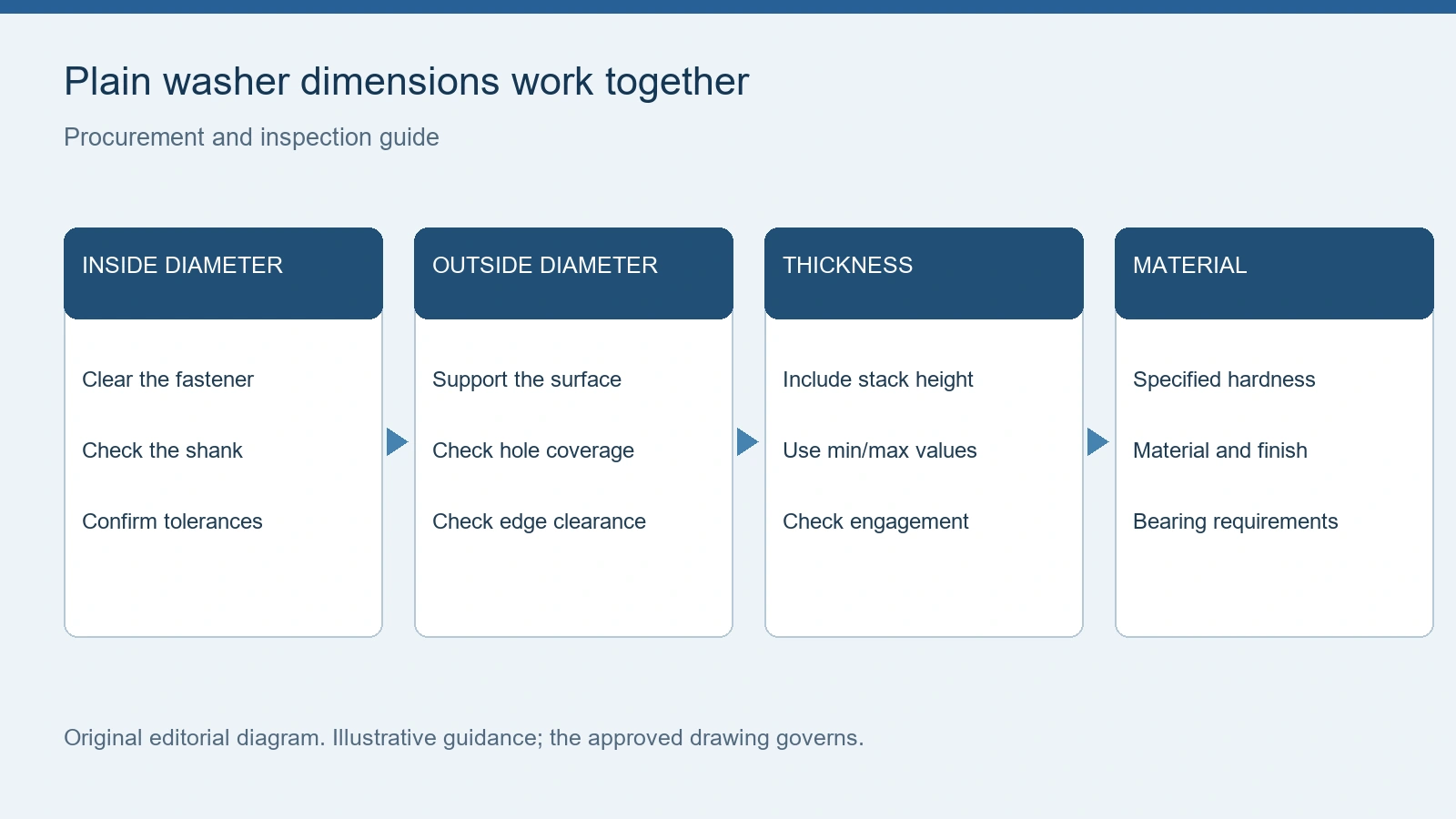
Select a plain washer by its inside diameter, outside diameter, thickness and specified material or hardness requirements. Matching the nominal bolt size is only the first check. The washer must fit the fastener and the surrounding geometry while providing the bearing support required by the joint design.
Four requirements to put on the drawing
| Requirement | What to verify |
|---|---|
| Inside diameter | Clearance around the intended shank or thread and compatibility with nearby radii |
| Outside diameter | Available bearing area and clearance to adjacent walls or features |
| Thickness | The specified tolerance and its contribution to the assembly stack |
| Material and hardness | The ordered class and required evidence, rather than an assumption from appearance |
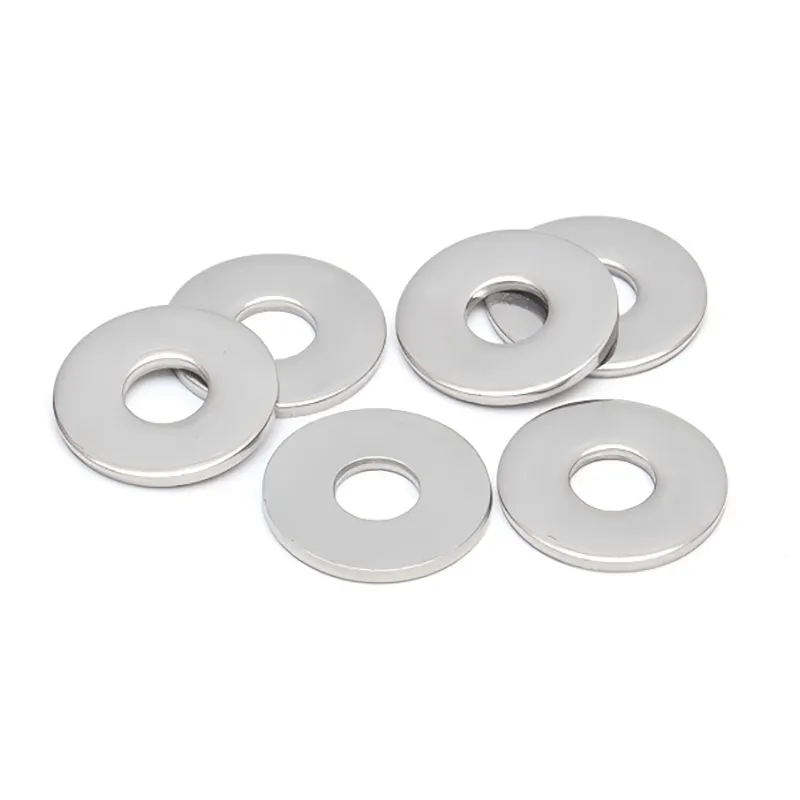
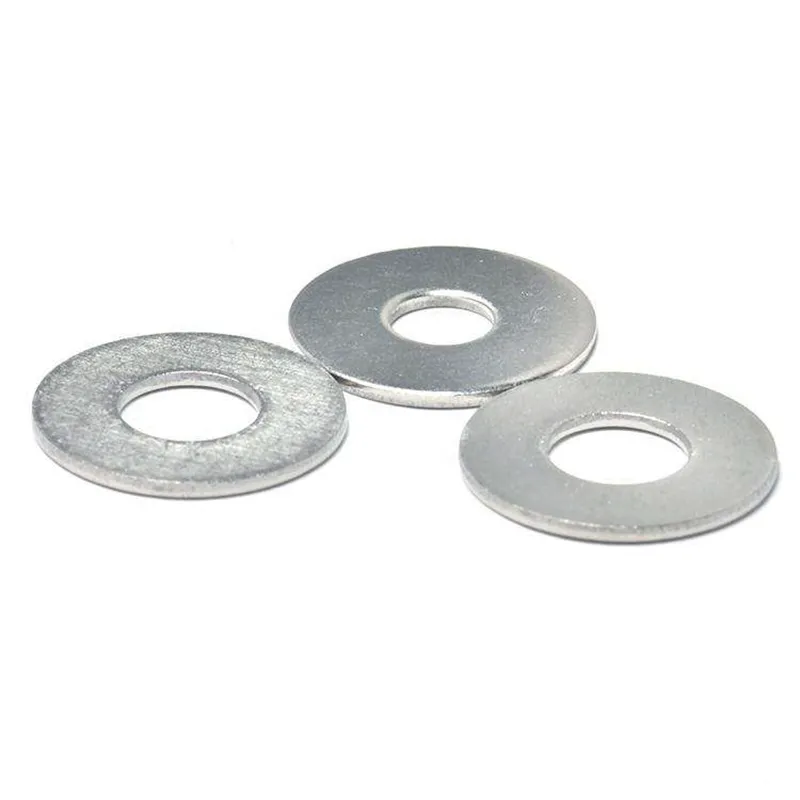
A catalog image can help identify a plain round washer. It cannot prove its hardness, coating thickness or conformity to a dimensional standard. Keep those requirements in the controlled purchase description.
What ISO 7089 does and does not settle
ISO 7089 covers normal-series, product-grade-A plain washers in 200 HV and 300 HV hardness classes. Its public scope identifies applications for each class and calls for checking suitability when clamping soft parts or using large clearance holes. Specify the applicable standard and class rather than ordering a generic “M-size washer.” The standard designation alone does not qualify every joint geometry.
Account for washer thickness in the stack
Illustrative arithmetic, not standard washer dimensions: suppose an approved washer drawing specifies 2.0 ±0.1 mm thickness. Two such washers contribute 3.8–4.2 mm to the assembly stack. Replacing them with two washers specified at 1.5 ±0.1 mm changes that contribution to 2.8–3.2 mm.
This difference must be considered when checking the chosen bolt length, usable thread and any blind-hole clearance. It is not a direct calculation of preload or strength. Recheck the complete assembly instead of assuming that unchanged bolt diameter means unchanged fit.
Inspect the bearing interface
Review the washer against both the fastener and the clamped component. A washer that fits over the thread can still conflict with an under-head radius, nearby wall or counterbore. An oversized hole can leave insufficient support beneath part of the washer. Soft material can require a different engineered bearing arrangement; simply choosing a wider washer does not establish its suitability.
| Receiving check | Useful evidence |
|---|---|
| Identity | Part number, drawing revision and lot identification |
| Dimensions | Recorded inside/outside diameter and thickness against tolerances |
| Condition | Agreed checks for burrs, distortion and surface damage |
| Specified properties | Material, hardness or finish records where required by the order |
| Assembly fit | Representative parts checked for interference and correct seating |
Make substitutions explicit
Ask a supplier to identify every difference before substituting a washer standard, thickness or hardness class. Keep dimensional approval separate from approval of material and finish. An apparently identical replacement may change the assembly stack or the supporting interface. Use the governing joint requirements to decide whether requalification is necessary.
FAQ
Does the nominal size equal the measured inside diameter?
Do not assume so. Read the actual dimension and tolerance in the selected specification.
Can a bright finish identify washer hardness?
No. Appearance is not a hardness test or a material certificate.
Is a larger outside diameter always better?
No. Check space, support and the engineering requirements of the joint.
Can I replace two washers with one of equal total thickness?
Not solely on that basis. Placement, interfaces and the approved assembly arrangement also matter.
Discuss your drawing with Ruike
Send your drawing, mating-part details, quantity and required inspection records to shizhanhao6@gmail.com. WhatsApp: +65 98695891. WeChat: Ethan1.
Cover: AI-assisted editorial illustration, not a photograph of production, testing or an actual order. Product photographs in the article are identified separately.
Related assembly guidance
Flange bolts versus separate washers. Use the linked guide to review the related assembly considerations; product-specific acceptance still follows the approved drawing and specification.