
Cap nuts are closed-end fasteners used to cover exposed bolt ends, reduce accidental contact with sharp threads, and provide a cleaner appearance to assembled products. Also known as acorn nuts or dome nuts, they are commonly found in furniture, equipment housings, decorative metalwork, and other applications where threaded connections remain visible.
Their rounded ends also shield exposed threads from direct contact and some environmental contamination. However, correct installation depends on more than matching the thread size. The bolt must fit within the nut’s internal cavity without contacting the closed end.
For manufacturers and OEM buyers, understanding this dimensional relationship helps prevent assembly problems and incorrect fastener selection.
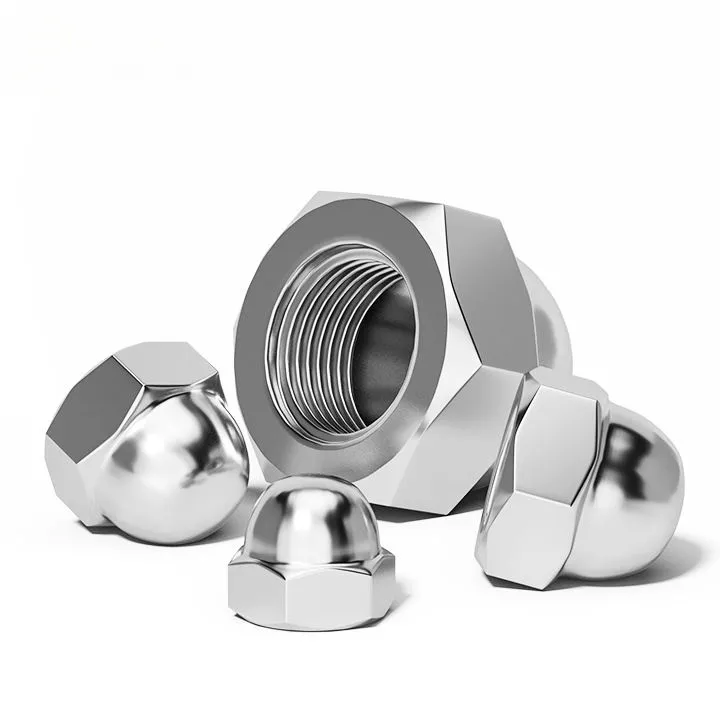
What Are Cap Nuts Used For?
The main purpose of cap nuts is to finish and protect exposed threaded connections. Their closed construction provides three practical benefits.
1. Reducing Contact With Exposed Threads
Exposed bolt ends can have sharp edges or rough thread surfaces. These may scratch nearby components, catch clothing, or cause discomfort when touched.
A rounded cap covers the protruding end, making it more suitable for accessible assemblies.
This is particularly useful for furniture frames, handrails, protective covers, and equipment positioned near operators.
2. Improving the Appearance of Finished Products
Standard hex nuts leave the bolt end visible. In consumer-facing products or decorative installations, this can make the connection appear unfinished.
The smooth dome of a cap nut provides a more uniform appearance. Polished stainless steel versions are especially suitable for visible metal assemblies.
3. Protecting Exposed Bolt Threads
The closed end reduces direct exposure of the covered threads to dust, dirt, and accidental mechanical contact.
However, cap nuts should not automatically be considered waterproof or corrosion-proof. Protection depends on the material, installation environment, and whether additional sealing is provided.
Buyers can compare available stainless steel cap nuts when selecting hardware for exposed connections.
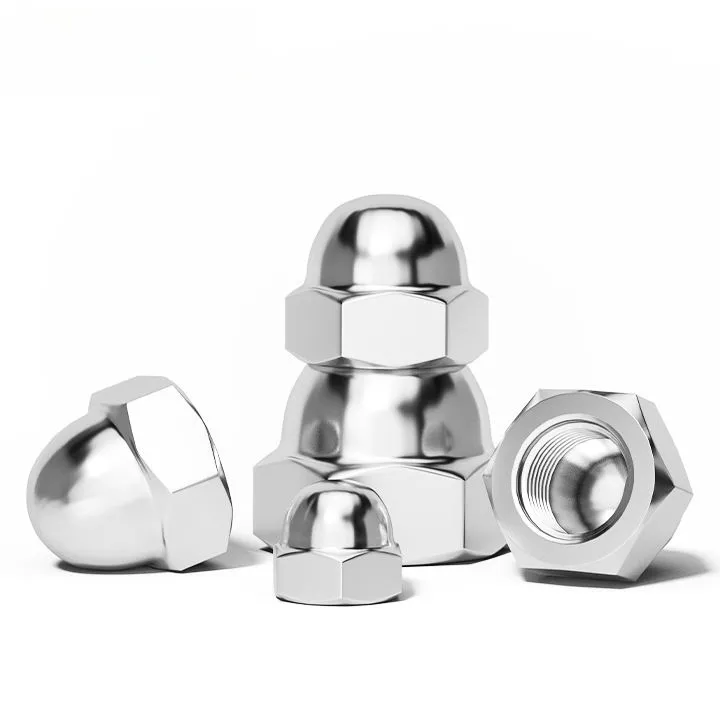
Cap Nut Structure: Which Dimensions Matter?
Most conventional cap nuts combine a hexagonal wrenching section with a rounded closed end.
Four structural features influence installation:
- Closed dome: Covers the protruding bolt tip.
- Hexagonal section: Allows tightening with a suitable wrench or socket.
- Internal thread: Engages with the matching bolt or threaded stud.
- Internal cavity: Provides space for the bolt end after installation.
Two dimensions deserve particular attention: overall height and usable internal depth.
Overall height is measured externally from the bearing face to the top of the dome.
Usable internal depth describes the space available for the mating bolt, subject to the actual thread and cavity geometry.
These dimensions are not interchangeable.
For example, two nuts with identical external heights may have different internal cavity depths because of variations in dome thickness or manufacturing design.
For standardized products, DIN 1587 is a common reference for metric domed hex cap nuts. Custom designs may require separate dimensional drawings.
Where Are Cap Nuts Commonly Used?
The appropriate application depends on visibility, accessibility, installation space, and environmental conditions.
| Application | Why Use Cap Nuts? | Important Selection Factor |
| Furniture frames | Covers exposed threaded ends | Smooth finish and bolt clearance |
| Equipment housings | Reduces contact with protruding bolts | Internal depth and tool access |
| Decorative metalwork | Provides a finished appearance | Surface finish and dome profile |
| Railings and fixtures | Covers accessible fastener ends | Corrosion resistance and secure assembly |
| OEM assemblies | Maintains consistent visible hardware | Dimensional repeatability |
For humid or outdoor applications, stainless steel cap nuts may offer useful corrosion resistance.
A2 stainless steel is commonly selected for general environments, while A4 stainless steel is often preferred where chloride exposure is more demanding. Actual suitability depends on the operating conditions.
For related components, explore Ruike Fasteners’s stainless steel nuts and bolt products.

How to Match Cap Nuts With Bolt Length
One of the most common assembly mistakes is selecting a cap nut based only on thread diameter and external height.
Because the end is closed, the protruding bolt must fit inside the available cavity.
Check Bolt Protrusion and Internal Clearance
Three measurements are essential:
- Bolt protrusion (P): Distance from the nut’s intended bearing surface to the bolt tip.
- Usable internal depth (D): Available insertion depth before the bolt contacts the internal end.
- End clearance (C): Remaining space between the bolt tip and the closed end.
The basic relationship is:
C = D − P
For a successful installation, the clearance must remain positive under the applicable dimensional tolerances.
Consider an illustrative assembly:
- Usable internal depth: 12 mm
- Bolt protrusion: 10 mm
- Remaining clearance: 2 mm
The 2 mm clearance is an example, not a universal design requirement. Actual clearance must account for thread engagement, tolerances, chamfers, and assembly conditions.
If the bolt reaches the closed end before the nut seats against the joint, the installer may feel resistance and incorrectly assume the connection is fully tightened.
This can leave insufficient clamping force even when the nut appears secure.
For critical assemblies, verify the bolt length and cap nut dimensions together. The related DIN 1587 cap nut OEM guide provides additional specification considerations.
What Specifications Should Buyers Confirm?
For wholesale purchasing or OEM production, a complete specification helps prevent mismatched deliveries.
| Specification | Information to Provide |
| Thread | Diameter, pitch, and thread standard |
| Nut dimensions | Width across flats, overall height, internal depth |
| Material | Stainless steel grade or other specified material |
| Surface finish | Polished, passivated, or specified appearance |
| Mating bolt | Thread size, protrusion, and tolerance |
| Quantity | Required order volume |
| Special requirements | Drawing, inspection, packaging, or custom geometry |
Buyers should also confirm whether the nut follows DIN 1587 or a customer-specific drawing.
For non-standard designs, Ruike Fasteners can review drawing-based requirements, including dimensional details, material selection, and mating fastener compatibility.
Frequently Asked Questions About Cap Nuts
Do cap nuts have locking features?
Standard cap nuts do not automatically provide prevailing-torque locking. Their primary function is covering the exposed bolt end. Applications requiring vibration resistance may need a specifically designed locking feature or another validated locking method.
Are cap nuts waterproof?
Not inherently. The dome covers the bolt tip, but moisture may still enter through the threaded interface or bearing surface. Watertight assemblies require suitable sealing design and verification.
Can cap nuts with the same height be interchangeable?
Not necessarily. Thread pitch, internal depth, wrench size, material, and dome geometry may differ. Always compare the relevant dimensions and mating bolt requirements before substitution.
Source Cap Nuts for Your OEM Assembly
Selecting cap nuts with the correct thread, internal clearance, and material helps ensure consistent assembly and a finished appearance.
Ruike Fasteners supplies stainless steel fasteners and supports drawing-based OEM/ODM requirements. For a cap nut quotation, share your thread specification, mating bolt dimensions, material, finish, and expected quantity.


