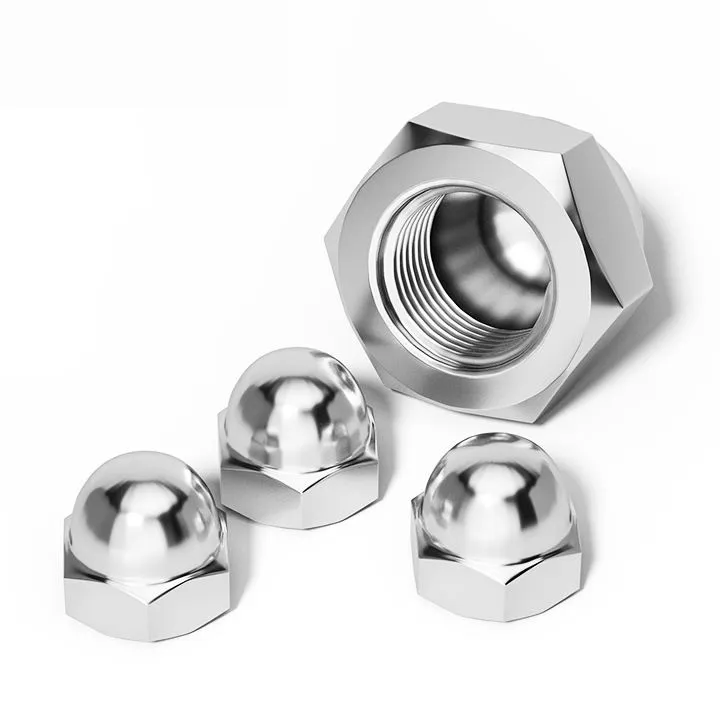
DIN 1587 Cap Nut OEM RFQ Guide
OEM buyers calling only “cap nut,” “acorn nut,” or “dome nut” on mixed metric BOMs often get dual quotes: one desk assumes a DIN 1587 domed cap nut, another ships a plain DIN 934 hex nut. This Ruike (Ningbo Hongyuan Precision Hardware Manufacturing Co., Ltd. / HY) guide locks DIN 1587 cap-nut OEM RFQ callouts in buyer English. It complements—not replaces—the DIN 934 hex-nut guide, the DIN 985 nyloc-nut note, and nut browsing under the category hub.
Plant context: About Us. Browse related hardware under nuts, hex nuts, and bolts. Hub index: Guides. Industry context: Applications. General RFQ questions: FAQ.
What DIN 1587 means on an HY RFQ
DIN 1587 names the metric domed hex cap (acorn) nut that covers the bolt end—not a plain DIN 934 hex nut and not a nylon-insert lock nut. On HY OEM RFQs, freeze standard, size×pitch, material/finish, and high/low dome style if owned—do not quote “cap nut similar.”
When OEM drawings should freeze DIN 1587
- Visible ends that need a closed dome over the bolt tip for look, snag, or soft-cover reasons.
- BOMs that previously received DIN 934 when engineering meant a domed cap nut.
- Programs that share one size callout across plain hex, nyloc, and cap-nut families.
- Jobs that still need mating bolt protrusion under the dome—see measure screw length.
DIN 1587 vs DIN 934 — RFQ comparison
| Callout | DIN 1587 path | DIN 934 path |
|---|---|---|
| Shape | Domed / acorn closed end | Open plain hex nut |
| RFQ must still freeze | Size×pitch, material, dome style if owned | Size×pitch, class/mark, material |
| Typical mix-up | “Cap nut” without DIN 1587 | Silent swap plain hex for dome |
Callouts that keep DIN 1587 intent clear
- Standard — DIN 1587—not “acorn similar” or “dome nut approx.”
- Size × pitch — match the mating bolt; coarse vs fine stays owned.
- Dome style — high/low or pattern if the Rev controls it.
- Material / finish — named; finish does not invent dome height.
- Not a lock nut — for nylon-insert prevailing torque, see DIN 985.
- Mating bolt — protrusion under the dome must fit—coordinate length with the bolt Rev.
Cross-reference pitfalls
Do not treat DIN 934 as a drop-in for DIN 1587. Do not assume a cap nut provides prevailing-torque locking. Parent appearance and tip coverage stay on the RFQ.
What to send with the RFQ
Attach the controlling PDF/STEP, name DIN 1587, size×pitch, dome style if owned, material/finish, qty band, and destination. Open Get a Quote so one enquiry thread owns the revision. Ruike will not invent ISO certificates, MOQ tables, or lead-time promises on this public page.
FAQ — DIN 1587 cap-nut OEM RFQ
What is DIN 1587 on an OEM RFQ?
It is the metric domed hex cap (acorn) nut that covers the bolt end—not a plain DIN 934 hex nut.
Is a cap nut the same as a nyloc nut?
No. DIN 985 nylon-insert lock nuts are a prevailing-torque family. DIN 1587 is a closed dome for tip coverage/appearance.
Can I substitute DIN 934 for DIN 1587?
Not without a drawing change. A plain hex nut leaves the bolt end open; the Rev owns the dome when DIN 1587 is called.
What must the RFQ still freeze besides “cap nut”?
Freeze DIN 1587, size×pitch, material/finish, and high/low dome if controlled—plus mating bolt protrusion under the dome.
What should I send so Ruike can quote DIN 1587 nuts?
Send PDF/STEP, DIN 1587, size×pitch, dome style if owned, material/finish, qty band, and destination via Get a Quote. Ruike does not invent ISO certs, MOQ, or lead times on your behalf.