
A removable panel needs occasional adjustment. The operator can reach the fastener easily, but carrying a wrench for every adjustment adds unnecessary work. This is where wing nuts may be useful.
Wing nuts have two projecting wings that allow tightening and removal by hand. Hex nuts have six wrenching flats and are normally installed using a wrench or socket. The choice depends on adjustment frequency, available space, required clamping force, and whether the assembly has a controlled tightening procedure.
For OEM equipment, hand tightening is most appropriate when the joint is designed for manual operation and does not depend on a precisely controlled preload.
Wing Nuts or Hex Nuts: Which Fits the Operation?
The simplest selection question is how the connection will be used after installation.
Choose wing nuts when:
- Operators need regular access or adjustment.
- Tool-free removal is part of the product design.
- The connection requires modest, application-validated clamping force.
- There is enough clearance for fingers to grip and rotate the wings.

Choose hex nuts when:
- Installation requires a specified tightening procedure.
- A wrench or socket can access the connection.
- The joint requires a validated preload or tightening method.
- Frequent manual removal is unnecessary.
Neither nut type automatically prevents loosening. Vibration resistance and joint security must be evaluated separately.
How Does Nut Geometry Affect Tightening?
The main structural difference is the surface used to apply turning force.
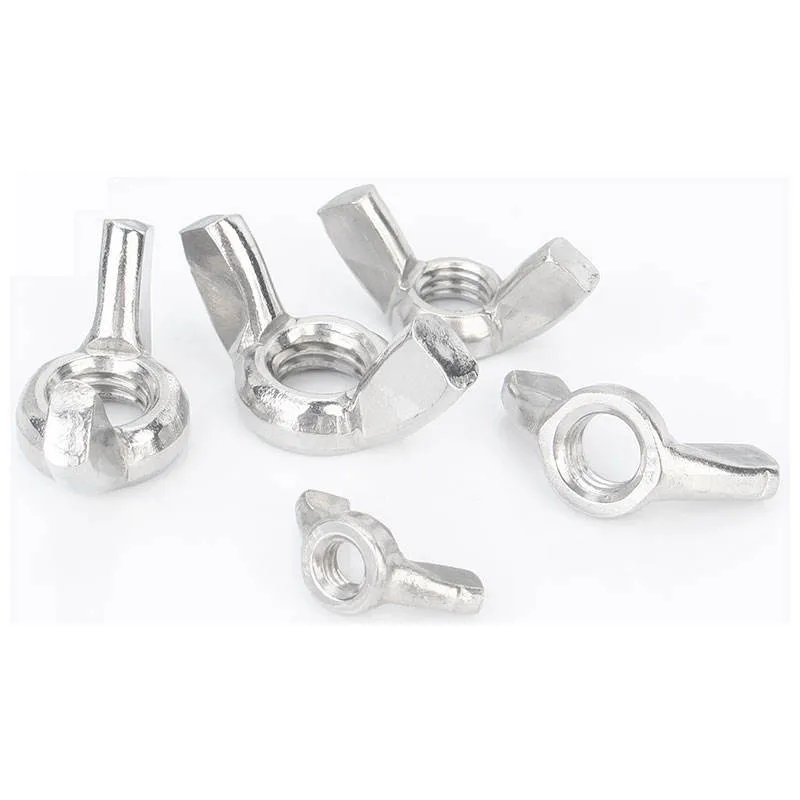
A wing nut has two lateral projections connected to a central threaded body. These wings provide a hand-operated grip, eliminating the need for a conventional wrench during normal use.
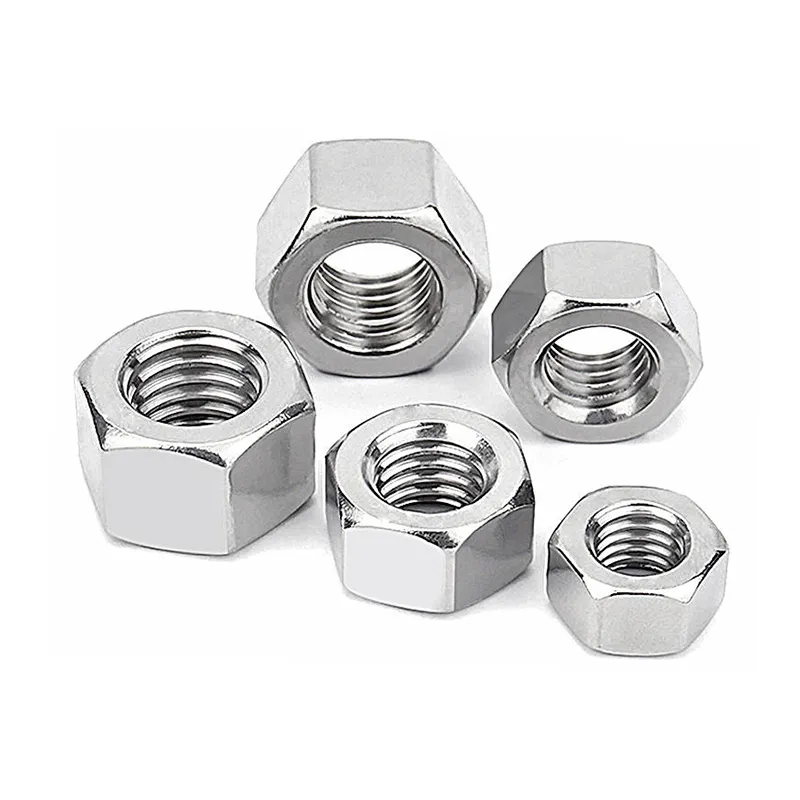
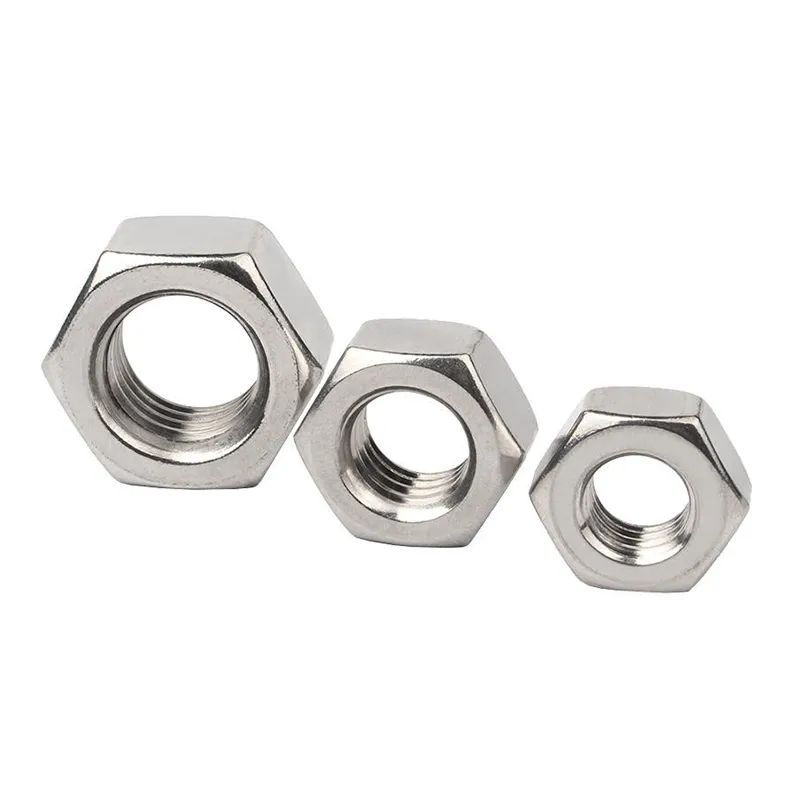
A hex nut uses six external flats. The flats engage with a suitable wrench or socket, allowing installation with tools designed for the required tightening procedure.
Both designs contain internal threads and a bearing surface that contacts the mating component or washer.
| Feature | Wing Nut | Hex Nut |
| Turning feature | Two projecting wings | Six wrenching flats |
| Normal operation | Hand tightening | Wrench or socket |
| Side clearance | Space for fingers and wings | Space for the selected tool |
| Tightening control | Operator-dependent | Compatible with controlled tooling |
| Typical purpose | Repeated manual adjustment | General mechanical fastening |
The geometry affects how torque is applied. It does not, by itself, establish the resulting preload or load capacity.
Explore Ruike Fasteners’s wing nut products and hex nut products to compare these fastening arrangements.
Why Wing Nut Shape Matters in Repeated Adjustment
Not all wing nuts have the same wing geometry or manufacturing construction.
Common designs include rounded wings, flatter projections, and variations produced through casting, forming, or other suitable manufacturing methods.
The selected form affects how comfortably an operator can grip and rotate the nut.
Three details deserve attention.
Wing width: Wider gripping surfaces may distribute finger pressure more comfortably, depending on the design.
Wing height: Taller projections can improve accessibility but require additional clearance around the connection.
Edge condition: Smooth, properly finished edges reduce discomfort during repeated handling.
Material and manufacturing method also influence dimensional consistency, surface finish, and mechanical performance.
For stainless steel wing nuts, buyers should confirm the specified material grade and product dimensions rather than assuming that visually similar designs are interchangeable.
When Does Hand Tightening Become a Limitation?
Hand tightening becomes unsuitable when the assembly requires a repeatable, specified preload that cannot be reliably achieved and verified through the intended manual process.
The force applied by an operator varies with hand strength, grip, accessibility, surface condition, and adjustment frequency.
A connection may feel tight while still providing insufficient clamping force.
Consider these conditions before selecting a fastening method:
| Assembly condition | Selection consideration |
| Frequent removal | Wing nut may improve access |
| Restricted finger space | Check whether a tool-operated nut fits better |
| Specified tightening torque | Use a compatible, validated tightening method |
| Vibration exposure | Evaluate a suitable locking arrangement |
| Repeated handling | Review wing shape, edges, and thread wear |
| High joint loading | Verify fastener strength and required preload |
Hex nuts are generally more suitable when a controlled installation procedure is required, but torque alone does not guarantee a particular preload. Friction, lubrication, bearing surfaces, and joint conditions also influence the result.
For related thread compatibility considerations, see our screw thread selection guide.
Three Assemblies Where Nut Selection Changes the Design
Removable Equipment Panels
A removable cover may use wing nuts when operators need tool-free access for routine inspection.
The designer must check finger clearance, washer placement, thread engagement, and whether the panel requires a defined clamping force.
If the cover forms part of a safety-related guarding system, fastener selection must follow the applicable equipment safety requirements.
Adjustable Positioning Fixtures
Wing nuts can suit fixtures that require manual repositioning between operations.
However, the clamping arrangement must reliably maintain the intended position.
Where movement could affect machining accuracy or operator safety, the tightening method needs appropriate validation.
Exhibition and Display Equipment
Display frames and temporary assemblies often benefit from fasteners that can be installed and removed without tools.
Wing nuts may reduce assembly steps, provided the wings do not interfere with adjacent components or exposed surfaces.
Hex nuts remain useful where a compact external profile or tool-controlled tightening is preferred.
For either arrangement, the mating bolt, washer, available thread length, and installation space should be reviewed together.
What Should an OEM Buyer Specify?
When requesting wing nuts or hex nuts, identify the complete fastening requirement rather than supplying only a product name.
A useful RFQ should include:
- Thread diameter, pitch, and applicable standard.
- Nut type and relevant dimensional drawing.
- Wing dimensions or hexagonal width across flats.
- Material grade and surface finish.
- Mating bolt and washer specifications.
- Required tightening method and operating conditions.
- Expected adjustment frequency and order quantity.
For custom wing designs, photographs or samples can help identify the intended shape, but approved drawings should govern production dimensions.
Ruike Fasteners supports stainless steel fastener sourcing and drawing-based OEM/ODM inquiries. Buyers can submit assembly requirements for specification review.
Frequently Asked Questions
Can wing nuts be tightened with pliers?
Pliers are generally not recommended for standard hand-operated wing nuts. Additional leverage can deform the wings, damage the surface, or apply excessive torque. Use a tool only when the product manufacturer specifies an appropriate method.
Are wing nuts suitable for controlled preload?
Standard hand-operated wing nuts are generally unsuitable when precise preload control is required. A specially engineered assembly may use a validated tightening procedure, but hand feel alone is insufficient.
What matters when wing nuts are adjusted frequently?
Check wing grip, edge finish, thread condition, corrosion exposure, and clearance. Repeated operation should also be assessed for wear and potential loosening.
Discuss Your Wing Nut or Hex Nut Requirements
The right choice depends on how the joint will be installed, adjusted, and maintained.
For stainless steel wing nuts, hex nuts, or custom fastening requirements, send Ruike Fasteners your thread specifications, drawings, mating components, material requirements, and estimated order quantity.


