 English
 Arabic
 Dutch
 French
 German
 Italian
 Portuguese
 Russian
 Spanish
In most cases, a screw is produced through several connected manufacturing steps rather than one machining operation. A typical screw manufacturing process includes:
Wire Preparation → Cold Heading → Thread Rolling → Heat Treatment → Surface Treatment → Inspection & Sorting → Packaging
The exact process can vary depending on the material, screw design, dimensions, strength requirements, thread specifications, tolerance, and surface finish. For standard fasteners, many steps follow established production methods. Custom screws may require additional tooling, sample approval, and engineering review before mass production.
What Are the Main Steps in the Screw Manufacturing Process?
1. Wire Preparation
Screw production starts with the right raw material. The wire must have the required material grade, diameter, surface condition, and dimensional consistency before it enters the forming process.
Common screw materials include:
- Carbon steel
- Stainless steel
- Alloy steel

The material is selected according to the required strength, corrosion resistance, application environment, and applicable standard. Incoming material may also be checked to verify its composition and quality before production.
For OEM orders, material consistency is particularly important because variations in wire quality can affect cold heading, thread rolling, heat treatment, and the final mechanical properties.
Hongyuan Fastener uses selected raw materials and carries out material inspection as part of its production control. This provides a more consistent starting point for high-volume and drawing-based screw orders.
2. Cold Heading: How Is the Screw Head Formed?
Cold heading is one of the key forming operations in screw production. Instead of cutting the final shape from a solid bar, the wire is cut into blanks and plastically deformed under pressure.
The basic process is:
Wire → Cutting → Die Forming → Screw Head and Shank
The wire blank is fed into a cold heading machine, where dies and punches apply controlled pressure to form the head and basic shank geometry. Different head designs require different tooling.
Pan head, flat head, round head, and other screw configurations may therefore require different die designs and forming sequences.
For high-volume production, equipment capacity and tooling control directly affect production efficiency. Hongyuan Fastener operates around 150 cold heading machines, supporting both standard and non-standard screw production.
3. Thread Rolling: How Are Screw Threads Formed?
After the basic screw shape is formed, the thread is produced through thread rolling or another suitable threading method.
In thread rolling, the screw blank passes between thread rolling dies. Pressure forces the material to plastically deform and form the required thread profile.
This differs from thread cutting. Cutting removes material to create the thread, while rolling forms the thread by displacing the material.
Thread rolling can provide consistent thread dimensions and is widely used for high-volume screw manufacturing. The required rolling process depends on the screw diameter, thread specification, material, and tolerance.
Hongyuan Fastener has around 100 thread rolling machines, allowing different thread specifications and production requirements to be handled within its screw manufacturing operations.
Why Do Screws Need Heat Treatment?
Not every screw requires the same heat treatment. The need for heat treatment depends on the material, screw type, strength requirements, and intended application.
Depending on the material and process, heat treatment can affect:
| Property | Purpose |
| Hardness | Helps resist deformation and wear |
| Tensile strength | Improves resistance to pulling loads |
| Toughness | Helps resist cracking and impact |
| Wear resistance | Supports durability during repeated contact |
Heat treatment parameters need to be controlled according to the material grade and required mechanical properties. For structural or high-strength fasteners, this stage can be particularly important.
How Are Screws Surface Treated?
After forming and, where required, heat treatment, screws may receive a surface treatment.
Common options include:
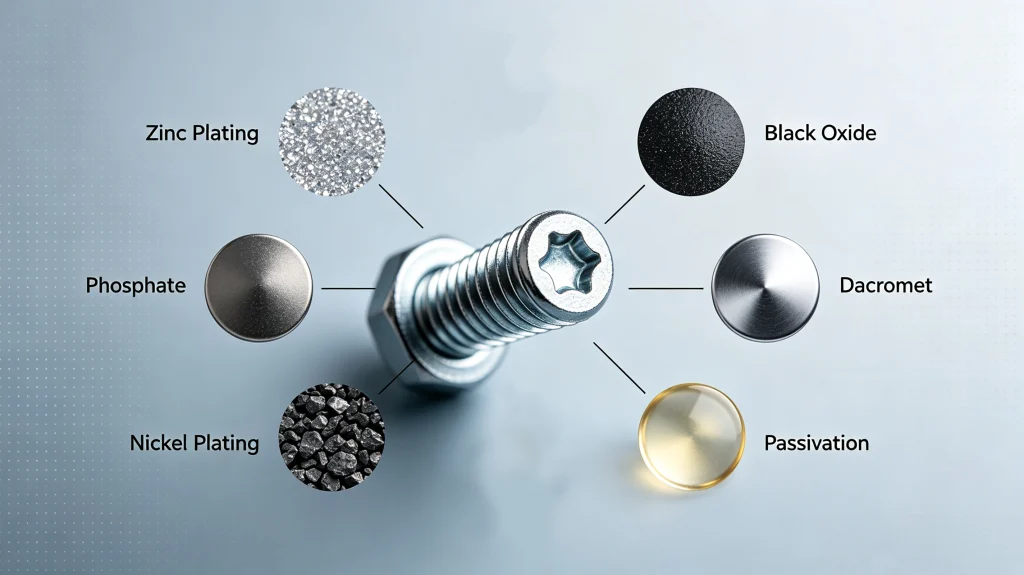
- Zinc plating
- Black oxide
- Passivation
- Protective coatings
The selected finish depends on the required corrosion resistance, appearance, operating environment, and application requirements.
Surface treatment is not simply a cosmetic step. For screws used in outdoor equipment, machinery, appliances, or other demanding environments, the appropriate surface protection can directly affect service performance.
How Are Screws Inspected During Production?
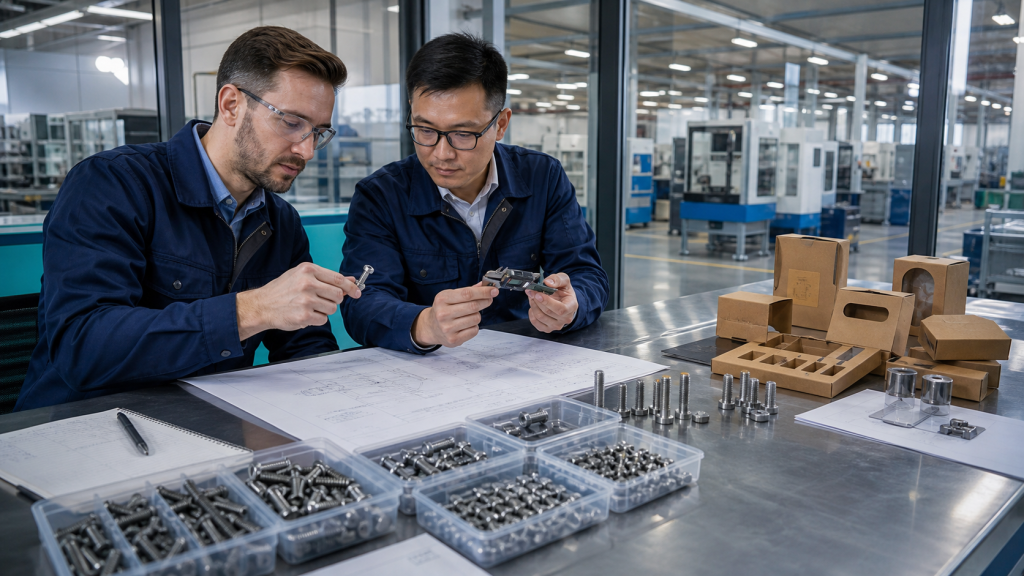
Inspection takes place at different stages rather than only after production is complete.
Dimensional Inspection
Manufacturers may check:
- Screw diameter
- Screw length
- Head dimensions
- Thread dimensions
Material Inspection
Material inspection verifies that the selected material and grade meet the specified requirements. Depending on the project, chemical composition and relevant material properties may also be checked.
Thread Inspection
Thread inspection can cover:
- Pitch
- Thread profile
- Thread tolerance
- Thread fit
For OEM screws, thread dimensions need to match the technical drawing and the mating component.
Visual Inspection
Visual inspection is used to identify:
- Scratches
- Cracks
- Deformation
- Surface defects
These checks help prevent defective parts from moving to the next production stage or being shipped to the customer.
What Is Optical Sorting for Screws and Why Is It Important?
For high-volume screw production, inspecting every part manually can be slow and inconsistent. Optical sorting uses automated vision systems to inspect large quantities of screws at high speed.
Depending on the equipment and inspection requirements, optical sorting can identify issues such as:
- Dimensional deviations
- Missing features
- Head defects
- Surface defects
- Certain thread-related problems
This is particularly useful for precision screws where small dimensional or appearance defects may affect automated assembly.
Hongyuan Fastener uses optical sorting and automated inspection equipment for precision screw orders, adding an automated inspection stage to conventional dimensional and visual quality checks.
How Are Finished Screws Sorted and Packaged?
After inspection, finished screws are sorted according to specification, quantity, and batch. The products are then packaged and labeled for shipment.
For B2B orders, packaging is more than a transportation requirement. Proper packaging helps with:
- Part identification
- Quantity control
- Batch traceability
- Preventing mixed specifications
For OEM buyers handling multiple screw sizes or similar-looking components, clear labels and controlled packaging can reduce receiving and assembly errors.
For projects requiring specific packaging configurations, see our Custom Screw Packaging Solutions for more details.
What Factors Affect the Screw Production Process?
Different screw designs do not always follow exactly the same production route.
| Factor | Impact on Production |
| Material | Affects forming and heat treatment |
| Screw dimensions | Affects equipment and tooling selection |
| Head design | Determines cold heading requirements |
| Thread type | Affects the threading method |
| Strength requirements | May require heat treatment |
| Surface treatment | Adds finishing operations |
| Tolerance requirements | Affect inspection methods |
These factors become especially important when producing non-standard screws based on customer drawings.
How Does Custom Screw Production Differ From Standard Screw Production?
A standard screw generally follows an established route:
Standard Selection → Standard Tooling → Mass Production → Inspection
A custom screw may require additional engineering work:
Drawing Review → Process Evaluation → Tooling Development → Sample Production → Sample Approval → Mass Production → Inspection
What Does Screw Manufacturing Involve for OEM Orders?
For OEM and non-standard screw orders, a supplier needs to manage more than the physical production process. The project may involve engineering drawings, material requirements, special dimensions, thread tolerances, tooling, samples, and batch inspection.
Hongyuan Fasteners offers manufacturing services for both standard and non-standard screws based on your drawings or samples.
You can provide screw drawings, samples, specifications, material requirements, and estimated order volumes.We will use this information to evaluate the requirements for forming, thread rolling, tooling, inspection, and production.