Zinc-Plated vs Stainless Fastener RFQ Callouts
OEM BOMs often leave the finish line vague—“zinc OK or stainless,” “any corrosion finish,” or a plated carbon callout next to an A2 note on the same joint. Purchasing then receives split quotes on base metal, plating thickness, passivation vs plating, and outdoor life. This guide locks zinc-plated vs stainless fastener RFQ drawing callouts before you send a print to Ruike (Ningbo Hongyuan Precision Hardware Manufacturing Co., Ltd. / HY). It complements—not replaces—the screw surface treatment overview, the stainless steel screws OEM selection notes, and the bolt grades strength-class rules.
Plant context: About Us. Browse related hardware under screws, bolts, and nuts. General RFQ questions: FAQ.
What “zinc-plated” vs “stainless” means on a buyer print
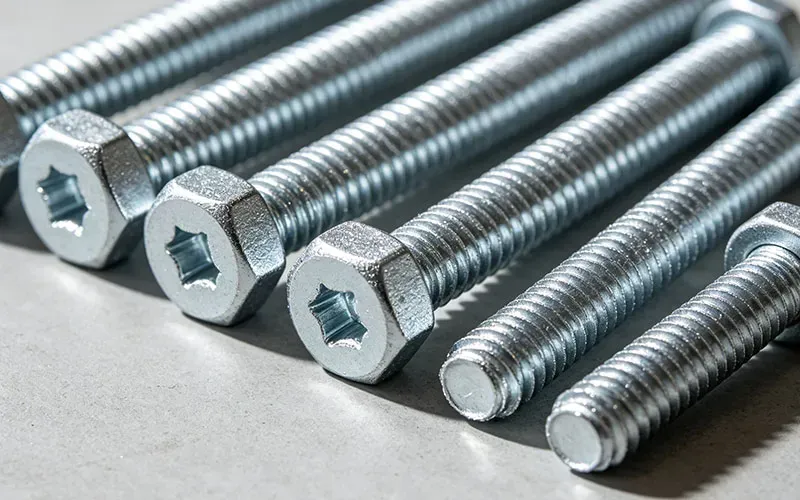
A zinc-plated fastener line on this desk means a carbon or alloy steel (or other non-stainless) substrate with an electrodeposited zinc (or named zinc-system) coating—thickness, chromate/trivalent topcoat, and appearance called out when the print owns them. Zinc plating is a finish on a different base metal; it is not a silent substitute for stainless chemistry.
A stainless fastener line means the part itself is a stainless alloy family (for example A2/304 or A4/316, or a buyer-named grade). Surface notes such as passivation or electropolish—if required—stay on their own lines. Stainless is not “zinc plating but shinier,” and zinc plating is not “budget stainless.”
On RFQs, Ruike prices the substrate + finish system you name. If the PDF says only “anti-rust screw” or “zinc / stainless OK,” vendors will guess—and two quotes will diverge on base metal, coating thickness, salt-spray expectations, and magnetic/weld behaviour. Catalog slang still needs a controlling designation or drawing note before it becomes a purchasable line item.
When OEM drawings should freeze a zinc-plated callout
Prefer an explicit zinc-plated callout when the joint is indoor or lightly corrosive, when cost/strength of carbon/alloy steel is required, when the buyer’s coating standard (zinc thickness, chromate type, appearance) is already frozen, or when mating hardware on that node is already plated carbon. Zinc-plated lines do not replace strength class, thread, or head-style lines—keep those on the same Rev.
Drawing notes that reduce resubmits
- Name the system: zinc-plated carbon/alloy steel vs stainless alloy family as distinct lines—never “zinc or stainless OK” without ownership.
- State coating system (electrodeposited zinc or named zinc-family), thickness band if controlled, and topcoat/appearance if the Rev owns them.
- Keep strength class / property mark, thread, and head/drive on their own lines.
- Name mating nut/washer finish so galvanic and appearance expectations match.
- If a stainless alternate exists, list it as an approved alternate with ECO—not as silent substitution.
When a stainless callout is the clearer RFQ path
Keep a stainless callout when outdoor, marine, food-contact, or chemical exposure drives corrosion risk; when the buyer standard freezes A2/A4 (or another named stainless) for that node; when magnetic or coating-wear behaviour of plated carbon is unacceptable; or when prior jobs for that joint already froze stainless. Stainless lines still need alloy family, size/thread, and length datum—and they do not silently replace a zinc-plated strength-class line if the print owns plated carbon instead.
- Alloy family — A2/304, A4/316, or buyer-named grade—not “any stainless.”
- Geometry — diameter × pitch (or size-TPI) and length with datum on the Rev.
- Surface notes — passivation / other finish only if print-required, on their own lines.
- Mates — nut / washer in a compatible stainless or approved system.
Cross-reference pitfalls — keep substrate and finish distinct
Substrate chemistry must stay separate from coating, strength class, and head style. Do not bury zinc-plated vs stainless inside a free-text “anti-corrosion OK” note next to a property-class bolt line. Plating thickness, salt-spray expectations, and stainless alloy family remain separate callouts—zinc “equivalents” of stainless outdoor life are not drop-in mates unless the controlling standard and buyer ECO say so.
Callouts that keep quotes aligned
- Material/finish line: zinc-plated (substrate + coating system) vs stainless (alloy family).
- Strength class / property mark when the print owns carbon/alloy grades.
- Coating thickness / topcoat or stainless surface note only as controlled.
- Thread + length + datum; mating nut/washer finish system.
- Approved alternates only with ECO or buyer-stated equivalent table.
- Qty band, packing marks, and destination country.
What to send with the RFQ
Attach the controlling PDF/STEP (or mark the sketch), name zinc-plated vs stainless (coating system or alloy family), include diameter × length with datum, strength class if applicable, mating nut/washer finish, qty band, and destination. Open Get a Quote so one enquiry thread owns the revision. Ruike will not invent ISO certificates, MOQ tables, or lead-time promises on this public page.
FAQ — zinc-plated vs stainless on HY RFQs
When should an RFQ freeze zinc-plated instead of stainless?
Freeze zinc-plated carbon/alloy when indoor or light-corrosion duty, cost/strength of plated steel, and a named coating system are already owned by the print. Prefer stainless when outdoor/marine/chemical exposure or a buyer stainless standard drives the joint. Do not write “zinc or stainless OK” without stating which system the Rev owns.
Is “anti-rust finish” or “zinc/stainless equivalent” enough on the BOM?
No. Those phrases mix substrate chemistry with coating systems and different inspection expectations. Catalog “equivalents” are approximations unless a buyer standard or approved-alternate table freezes interchange. Vendors will quote different base metals if the print is vague.
Does choosing zinc-plated vs stainless replace naming strength class or head style?
No. Material/finish is a corrosion and substrate lock. Strength class, head style, drive, thread, and length remain separate lines when the print owns them. Do not collapse “any anti-corrosion fastener” into one zinc/stainless sentence.
Can suppliers freely substitute stainless for a zinc-plated callout?
Only with a buyer ECO or approved alternate. Base metal, coating thickness, cost, magnetism, and sometimes strength class all change. Silent substitution is a top dual-quote and field-life risk. Lock the system the joint was designed for, then list approved alternates if any.
What should I send so Ruike can quote zinc-plated vs stainless lines?
Send PDF/STEP or approved sample path, material/finish system (zinc-plated substrate+coating vs stainless alloy family), diameter × length with datum, strength class if controlled, mating nut/washer finish, annual/batch qty, and buyer-stated ship window. Use Get a Quote—Ruike does not invent ISO certs, MOQ, or lead times on your behalf.