 English
 Arabic
 Dutch
 French
 German
 Italian
 Portuguese
 Russian
 Spanish
Role: This is the surface-treatment decision page for OEM screw RFQs—finish name + what must be locked with base material and tolerance. It is not a trends essay, not an aerospace encyclopedia, and not a second materials hub. Process detail for Dacromet stays on the short process note Dacromet treatment process flow. Alloy selection stays on stainless steel screws OEM selection. After you name the finish, submit the brief via Get a Quote.
What makes one screw surface treatment more suitable than another?
The answer depends on the screw material, working environment, required service life, and production cost. A finish that works well for an indoor machine may not provide enough protection for outdoor or marine equipment.
Surface treatment can improve corrosion resistance, wear resistance, appearance, and durability, but different processes offer different levels of protection and cost. For OEM buyers, choosing the right treatment means finding the best balance between performance and production requirements.
This guide compares 6 commonly used screw surface treatment options and explains what buyers should consider before ordering.
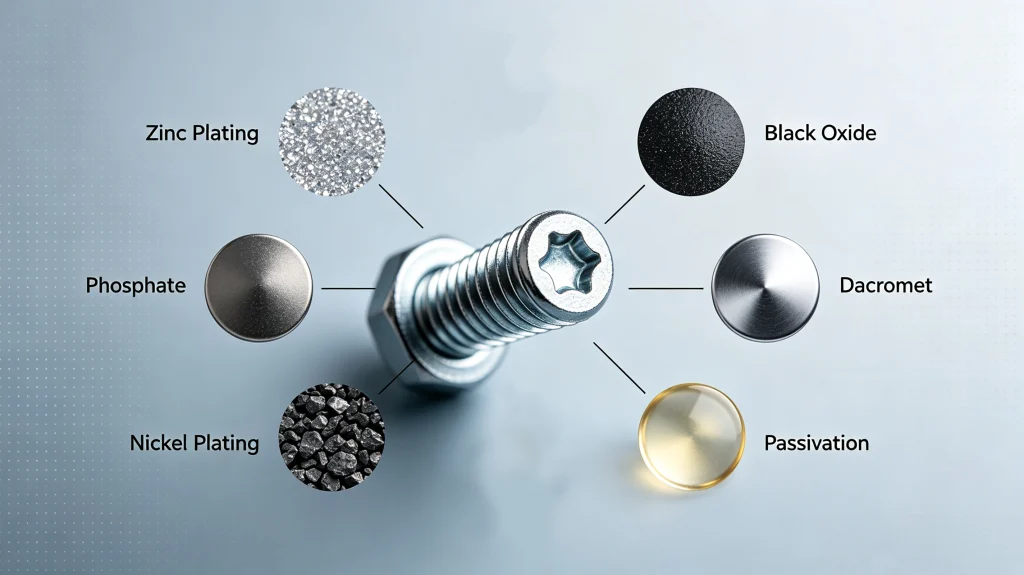
Screw Surface Treatment Comparison
| Surface treatment | What to specify | What to verify |
|---|---|---|
| Zinc plating | Specify thickness, supplementary treatment and applicable coating standard. | Request the agreed corrosion test and acceptance criterion for the complete finish. |
| Black oxide | Specify the process and any oil, wax or other supplementary protection. | Confirm the complete system is suitable for the expected moisture exposure. |
| Dacromet coating | Identify the exact coating product, specification and any topcoat. | Confirm corrosion requirements, thread fit and assembly requirements for that system. |
| Nickel plating | Specify the plating system, thickness and appearance requirements. | Agree inspection criteria for the actual substrate and service conditions. |
| Phosphate coating | Specify the phosphate system and any oil, lubricant or paint applied afterward. | Evaluate the complete finish rather than the phosphate layer alone. |
| Stainless steel passivation | Specify stainless grade, treatment standard and verification method. | Verify treatment effectiveness; passivation does not by itself establish suitability for a marine or chemical environment. |
These are specification questions, not universal corrosion-resistance or price rankings. Compare quotations against the same material, finish specification, inspection requirements and order quantity. Appearance alone does not prove corrosion performance.
Common Screw Surface Treatment Methods
Zinc Plating
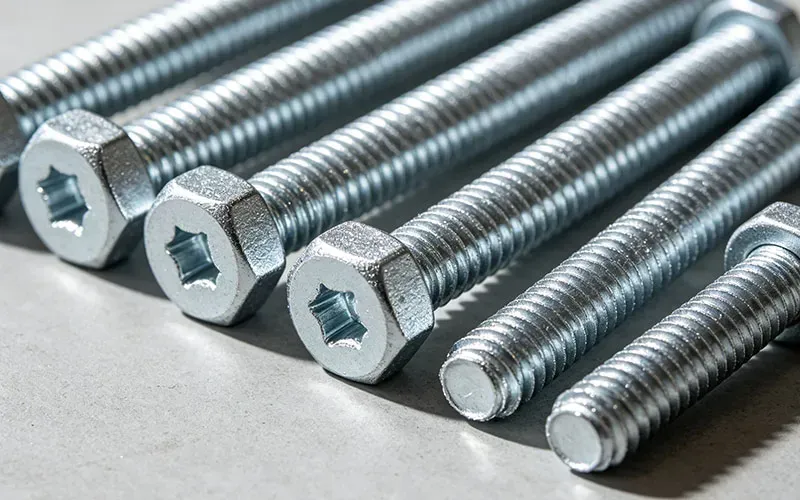
Zinc plating is widely used for carbon steel screws because it provides basic corrosion protection at a relatively low cost. The zinc layer acts as a barrier and provides sacrificial protection when the surface is damaged.
It is commonly used for machinery, industrial equipment, furniture hardware, and general-purpose fasteners. For large OEM orders, it is often a practical choice when moderate corrosion resistance is sufficient.
Black Oxide
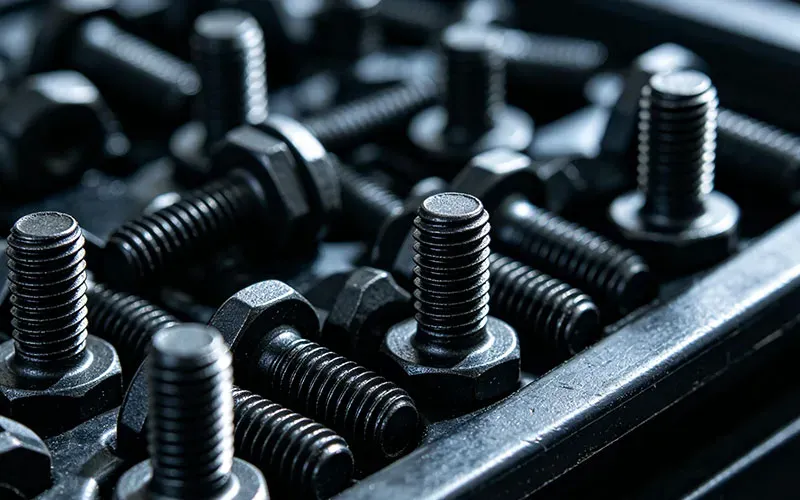
Black oxide forms a thin oxide layer that gives steel screws a black appearance. Since the treatment has little effect on dimensions, it is useful for precision screws and mechanical components where maintaining thread and dimensional accuracy is important.
Its corrosion resistance is limited, however, so oil or another protective treatment may be required for humid environments.
Dacromet Coating
Dacromet is a zinc-aluminum flake coating designed for higher corrosion resistance. It is commonly used in automotive components, outdoor equipment, and applications exposed to moisture or salt.
For high-strength fasteners, buyers should also consider hydrogen embrittlement risks associated with certain electroplating processes. This makes the coating process an important part of fastener specification, not simply a cosmetic choice.
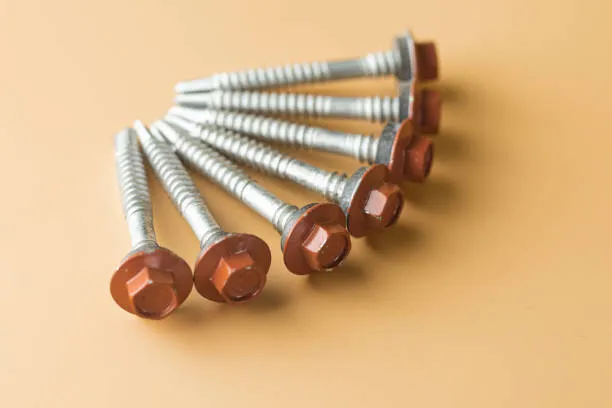
Nickel Plating
Nickel plating creates a smooth, bright surface while improving corrosion resistance and surface hardness. It is often selected for electronic equipment, precision components, and visible hardware.
For OEM products, nickel plating can provide both functional protection and a consistent appearance where surface quality is part of the specification.
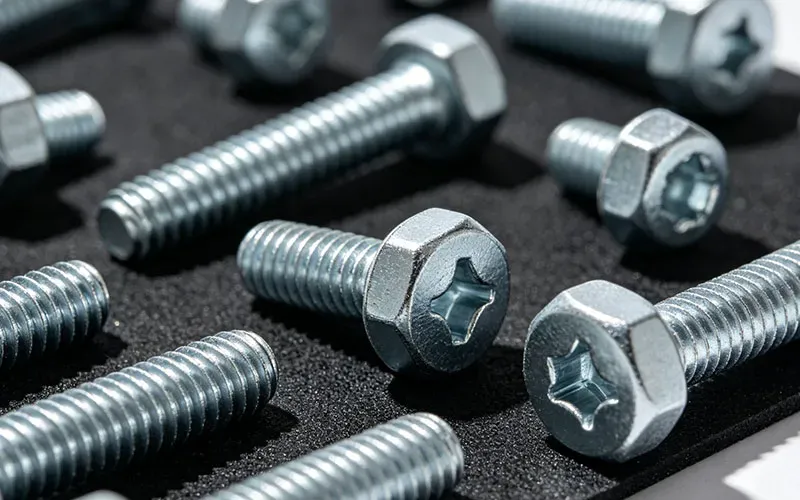
Phosphate Coating
Phosphate coating is mainly used when lubrication, friction control, or paint adhesion is important. Its porous surface can retain lubricants and provide a suitable base for additional coatings.
It is commonly used for mechanical components but generally does not provide enough corrosion protection on its own for severe outdoor or marine applications.
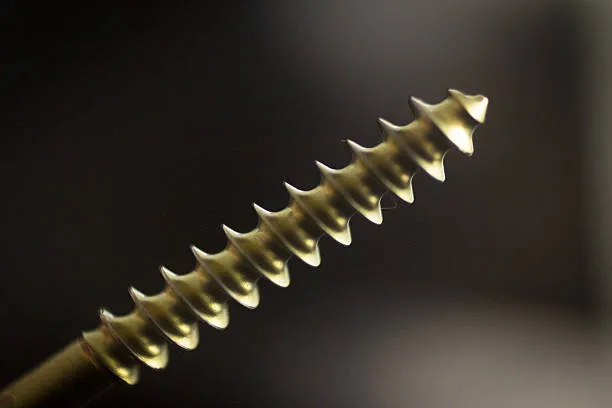
Passivation
Passivation is primarily used for stainless steel screws. Rather than adding a conventional coating, the process removes surface contaminants and helps restore the protective passive layer of stainless steel.
It is commonly considered for food-processing equipment, medical equipment, marine applications, and other environments where corrosion resistance and surface cleanliness are important.
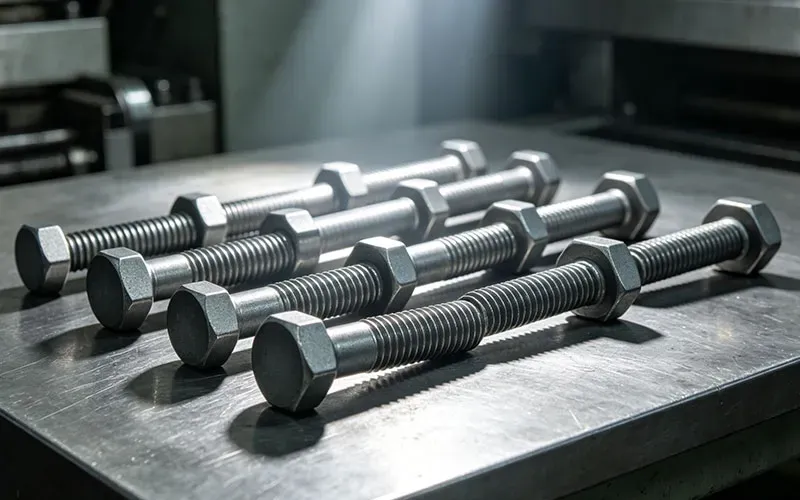
How Should OEM Buyers Choose a Screw Surface Treatment?
Consider the Working Environment
The first consideration should be where the screw will be used.
| Environment | Possible Treatment |
| Indoor equipment | Zinc plating, Black Oxide |
| Outdoor applications | Dacromet, suitable zinc systems |
| Marine environments | Assess the stainless grade and joint design for the actual exposure; passivation alone does not establish marine suitability. |
| Chemical exposure | Material and coating selected for the specific chemical |
For severe environments, changing the base material may be more effective than simply choosing a thicker coating.
Match the Treatment to the Application
Surface treatment also affects mechanical and assembly performance. High-strength fasteners require attention to hydrogen embrittlement, while frequently assembled screws may need better wear and friction characteristics.
Precision screws require another consideration: coating thickness. An excessive or uneven coating can affect thread fit, torque, and automated assembly. These requirements should therefore be confirmed before production rather than after the screws are manufactured.
Balance Performance and Cost
Compare supplier quotations for the same quantity, material, treatment specification, inspection and packaging requirements. A treatment name alone is not enough to assign a reliable cost ranking.
The most expensive treatment is not necessarily the best choice. The objective is to select the simplest process that can reliably meet the required service conditions.
An Overlooked Factor: Coating Thickness and Dimensional Tolerance
For standard screws, surface treatment may have little noticeable impact on assembly.
For precision and customized fasteners, however, coating thickness can become an important engineering consideration.
A thick or uneven coating may affect:
- Thread fit
- Overall dimensions
- Torque and friction
- Automated installation
This is why OEM buyers should confirm coating specifications during the drawing and production stage, particularly for small-diameter screws or components with tight tolerances.
Surface Treatment and Base Material Should Be Selected Together
A common mistake is choosing the surface treatment independently from the screw material.
For example, zinc-plated carbon steel and passivated stainless steel both provide corrosion protection, but they rely on different protection mechanisms and are suitable for different conditions.
A more practical selection method is to evaluate:
Base Material + Surface Treatment + Working Environment + Service Life
This approach helps OEM buyers avoid both under-specification and unnecessary processing costs.
RFQ: lock finish with the part—not as a separate afterthought
Use this finish block together with geometry and material on the same enquiry. Leave a cell blank only when the drawing truly omits it—do not invent coating hours or thicknesses.
| RFQ field | What to lock | Notes |
| Base material / alloy | Carbon class family or SS alloy (e.g. 8.8, 304/A2, 316/A4) | Finish does not replace material lock |
| Finish / coating name | Buyer-named process (e.g. zinc, nickel, black oxide, Dacromet, passivation) | “Rust-proof” alone is not quotable |
| Appearance vs function | Cosmetic only vs corrosion / torque / conductivity need | State the duty in plain words |
| Thickness / build-up | Dimensional allowance if coating adds stack | Confirm dimensional allowances and finished-part acceptance against the drawing. |
| Masking / thread | Threads masked Y/N; gauge after coating Y/N | Especially for tight fits / 6g style callouts |
| Passivation (SS) | Y/N + buyer-named method if any | Identify the required material, treatment method and verification records. |
| Test / acceptance | Buyer-named (salt spray, adhesion, etc.) | Agree the test method, duration, acceptance criteria and required records before ordering. |
| Drawing / Rev | Finish note on the same Rev as geometry | Or approved sample + written finish name |
When finish + material + diameter × pitch × length-method are locked, open Get a Quote. For non-catalog geometry, also use the custom screw RFQ checklist.
FAQ
Do aerospace programs need a separate surface-treatment guide on this site?
No. Name the buyer-required finish and test methods on the RFQ. Confirm program-specific requirements against the customer-approved drawing and applicable specification.
Can I copy an aerospace coating callout onto a commercial joint?
Only with engineering sign-off. Coating build-up and inspection differ; lock thickness/masking on the RFQ table above rather than pasting a marketing label.
Agree: name the finish, then quote
Lock base material + finish name + thickness/masking needs + acceptance tests you actually require, on the same Rev as geometry. Then submit at Get a Quote. Sisters: stainless steel screws OEM selection, custom screw RFQ checklist, Dacromet process note.
Need Help Choosing the Right Finish?
For customized screws, selecting a suitable surface treatment requires more than comparing coating prices. The finish needs to match the material, dimensions, application environment, and performance requirements.
With more than 20 years of experience in custom screw manufacturing, Hongyuan Fastener works with different fastener materials, specifications, and surface treatment requirements for OEM projects.
If you are unsure whether zinc plating, black oxide, Dacromet, nickel plating, phosphate, or passivation is right for your application, contact Hongyuan with your drawing, material specification, and working conditions. Or submit via Get a Quote. Our team can help evaluate a practical finish based on performance, appearance, dimensional requirements, and production cost.
Related RFQ drawing callouts: when BOMs mix plated carbon with stainless alloy notes, lock the system with the zinc-plated vs stainless fastener RFQ guide before you send the print.