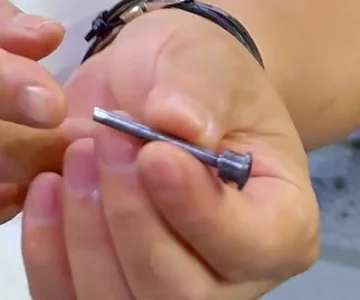
Dowel Pin OEM RFQ Callouts
OEM buyers who only write “dowel pin” on locating or alignment BOMs often get dual quotes: one desk assumes a precision headless dowel; another kits a clevis pin, hitch pin, or spring/roll pin. This Ruike (HY) guide locks dowel pin OEM RFQ callouts.
It complements—not replaces—the sibling clevis pin OEM RFQ, Belleville washer OEM RFQ, shoulder bolt OEM RFQ, machine bolt OEM RFQ, and flange bolt OEM RFQ.
Plant context: About Us. Hub index: Guides. Industry context: Applications. General RFQ questions: FAQ.
What should an OEM RFQ freeze for a dowel pin?
A dowel-pin RFQ must freeze diameter and fit class (or tolerance), length, end/chamfer style if controlled, material or grade, hardness if required, and finish—so buyers cannot silent-swap a clevis pin, hitch pin, or spring/roll pin. Name “dowel pin”; attach PDF/STEP and open Get a Quote.
What a dowel pin means on an HY RFQ
A dowel pin is a precision locating pin—typically headless—pressed or slip-fit into mating holes to control alignment. Buyers name nominal diameter and fit class (or tolerance), length, end style if drawn, material or stainless grade, hardness when required, and finish. It is not a headed clevis pin with cotter/chain retainer, not a hitch pin for towing, and not a threaded bolt—unless the Rev explicitly freezes those families.
When OEM drawings should freeze dowel-pin geometry
- Fixture, housing, or plate stacks that own precision locating pins rather than headed retainers.
- BOMs that previously received clevis-pin or hitch-pin kits when engineering needed dowel pins.
- Programs that mix “dowel / locate pin / alignment pin” language with anonymous “pin similar” lines.
- Jobs that already freeze clevis-pin language on the sibling page—keep this page when the Rev writes dowel pin and must freeze Ø/fit + length.
Dowel pin vs clevis / hitch / spring pin — RFQ comparison
| Callout | Dowel pin (this page) | Clevis / hitch / spring |
|---|---|---|
| Buyer language | Dowel pin · locate pin | Clevis pin · hitch pin · spring/roll pin |
| Geometry intent | Headless precision Ø/fit into holes | Headed + retainer · bent hitch · compressible hollow |
| Key callouts | Ø/fit, length, end style, material, hardness, finish | Head/retainer · hitch bend · slot/coil |
| Typical mix-up | “Pin similar” / “dowel any” | Silent swap to clevis, hitch, or spring pin |
Callouts that keep dowel-pin intent clear
- Family — dowel / locate pin—not “clevis similar” or automatic hitch merge.
- Diameter / fit — nominal Ø plus fit class or tolerance as drawn.
- Length / ends — overall length and chamfer or crown ends when controlled.
- Material / finish — carbon or stainless grade, hardness if required, plus coating; finish does not invent ISO marks.
Cross-reference pitfalls
Do not treat dowel pins as clevis pins, hitch pins, or spring/roll pins. For headed pin + retainer see the clevis pin OEM RFQ; for bolted joints see the shoulder bolt OEM RFQ or machine bolt OEM RFQ.
What to send with the RFQ
Attach the controlling PDF/STEP or pin schedule, name dowel pin, diameter/fit, length, end style, material, hardness, finish, qty band, and destination. Open Get a Quote so one enquiry thread owns the revision. Ruike will not invent ISO certificates, MOQ tables, or lead-time promises on this public page.
FAQ — Dowel pin OEM RFQ
What is a dowel pin on an OEM RFQ?
It is a dowel pin: typically a headless precision locating pin pressed or slip-fit into mating holes—called out with diameter/fit class, length, material or grade, hardness, and finish—not a clevis pin, hitch pin, or threaded bolt. Freeze family, pin diameter/fit, length, material, and finish.
How does a dowel pin differ from a clevis pin or hitch pin?
A dowel-pin RFQ owns locating geometry (usually headless, controlled Ø/fit). A clevis pin is a headed pin retained by cotter/chain; a hitch pin is a bent or locking pin for towing/implements. Do not silent-swap families when the Rev freezes dowel-pin callouts.
Is a dowel pin the same as a spring pin or roll pin?
No. A dowel pin is a solid locating pin with defined diameter/fit; a spring/roll pin is a hollow slotted or coiled pin that compresses into the hole. Keep spring-pin vs dowel language separate when engineering wrote dowel pin.
How should diameter, fit, length, material, and finish be called out?
State dowel pin, nominal diameter and fit class (or tolerance), length, chamfer/end style if controlled, material or stainless grade, hardness if required, and coating. Do not stop at “pin similar,” “dowel any,” or “locate pin similar” alone.
What should I send so Ruike can quote dowel pins?
Send PDF/STEP or pin schedule, diameter/fit, length, end style, material, hardness, finish, qty band, and destination via Get a Quote. Ruike does not invent ISO certs, MOQ, or lead times on your behalf.