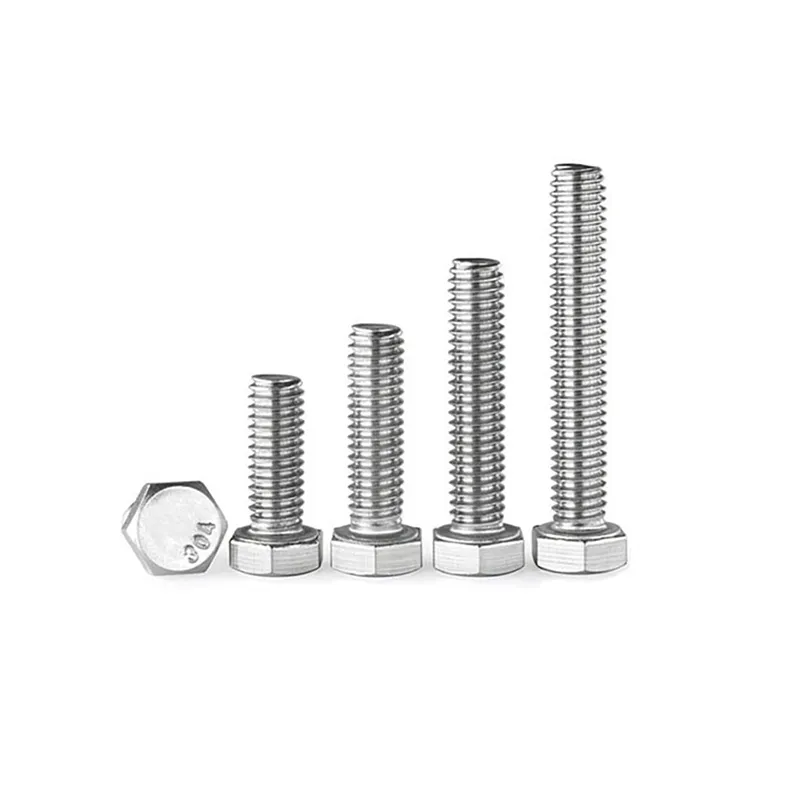
Machine Bolt OEM RFQ Callouts
OEM buyers who only write “machine bolt” on hex-head BOMs often get dual quotes: one desk assumes a nutted hex bolt with named thread length; another kits a carriage bolt, stud bolt, shoulder bolt, or machine screw. This Ruike (HY) guide locks machine bolt OEM RFQ callouts.
It complements—not replaces—the sibling DIN 931 hex bolt OEM RFQ, DIN 933 hex bolt OEM RFQ, carriage bolt OEM RFQ, stud bolt OEM RFQ, shoulder bolt OEM RFQ, and machine screw OEM RFQ.
Plant context: About Us. Hub index: Guides. Industry context: Applications. General RFQ questions: FAQ.
What should an OEM RFQ freeze for a machine bolt?
A machine-bolt RFQ must freeze diameter, length, thread series or pitch, partial vs full thread, grade or property class, and finish—so buyers cannot silent-swap a carriage bolt, stud bolt, shoulder bolt, or machine screw. Name “machine bolt” or “hex bolt”; attach PDF/STEP and open Get a Quote.
What a machine bolt means on an HY RFQ
A machine bolt (hex-head bolt in common OEM language) clamps through a clearance hole with a nut, or mates to a named threaded receiver when the Rev says so. Buyers name nominal diameter, length under head, UNC/UNF or metric pitch, partial vs full thread, grade or property class, and finish or stainless grade. It is not a carriage bolt with square neck, not a headless stud bolt, not a precision shoulder bolt, and not a small machine screw into a tapped hole—unless the Rev explicitly freezes those families.
When OEM drawings should freeze machine-bolt geometry
- Structural or equipment joints that own a nutted hex-head bolt with named thread length.
- BOMs that previously received carriage, stud, or shoulder kits when engineering needed a machine bolt.
- Programs that mix “machine bolt / hex bolt / hex head bolt” language with anonymous “bolt any” lines.
- Jobs that already freeze DIN 931 or DIN 933—see sibling DIN pages when the Rev owns those marks.
Machine bolt vs carriage / stud / shoulder / machine screw — RFQ comparison
| Callout | Machine bolt (this page) | Carriage / stud / shoulder / machine screw |
|---|---|---|
| Buyer language | Machine bolt · hex bolt · hex head bolt | Carriage · stud · shoulder · machine screw |
| Geometry intent | Headed bolt for nutted clamp; named thread length | Square neck · headless ends · precision shoulder · tapped-hole screw |
| Key callouts | Ø, length, thread, partial/full, grade/class, finish | Neck · end lengths · shoulder Ø×L · screw head/drive |
| Typical mix-up | “Hex any” / “machine bolt similar” | Silent swap to carriage, stud, shoulder, or machine screw |
Callouts that keep machine-bolt intent clear
- Family — machine / hex-head bolt—not “bolt similar,” “carriage any,” or automatic stud merge.
- Size / thread — nominal diameter, length under head, UNC/UNF or metric pitch, partial vs full thread.
- Grade / class — ASTM grade or ISO/property class; do not invent cert marks from a photo alone.
- Finish — coating or stainless grade; finish does not invent ISO marks.
Cross-reference pitfalls
Do not treat machine bolts as carriage bolts, stud bolts, shoulder bolts, or machine screws. For named metric partial-thread see the DIN 931 hex bolt OEM RFQ; for full-thread metric see the DIN 933 hex bolt OEM RFQ; for square-neck wood joints see the carriage bolt OEM RFQ; for headless ends see the stud bolt OEM RFQ; for precision shoulders see the shoulder bolt OEM RFQ; for tapped-hole screws see the machine screw OEM RFQ.
What to send with the RFQ
Attach the controlling PDF/STEP or fastener schedule, name machine bolt, diameter, length, thread series/pitch, partial vs full thread, grade/class, finish, qty band, and destination. Open Get a Quote so one enquiry thread owns the revision. Ruike will not invent ISO certificates, MOQ tables, or lead-time promises on this public page.
FAQ — machine bolt OEM RFQ
What is a machine bolt on an OEM RFQ?
It is a machine bolt / hex-head bolt intended to clamp with a nut (or through a clearance hole)—called out with diameter, length, thread series or pitch, partial vs full thread, grade or property class, and finish—not a carriage bolt, stud bolt, shoulder bolt, or machine screw into a tapped hole. Freeze family, Ø, length, thread, grade/class, and finish.
How does a machine bolt differ from a carriage bolt, stud bolt, or shoulder bolt?
A machine-bolt RFQ owns a hex (or named) head with machine thread for nutted joints. Carriage bolts own a round head plus square neck; stud bolts own headless double-end thread; shoulder bolts own a precision unthreaded shoulder. Do not silent-swap families when the Rev freezes machine-bolt geometry.
Is a machine bolt the same as a machine screw or a DIN 931 / DIN 933 line?
No. Machine screws typically own smaller diameters into tapped holes or nuts without claiming a bolt BOM. DIN 931 / DIN 933 pages own named metric hex standards (partial vs full thread). Keep those siblings when the Rev freezes the DIN/ISO mark; keep this page for general machine-bolt / hex-bolt OEM language.
How should diameter, length, thread, grade, and finish be called out?
State machine bolt (or hex bolt), nominal diameter, length under head, UNC/UNF or metric pitch, partial vs full thread, grade or property class, and coating or stainless grade. Do not stop at “hex any,” “machine bolt similar,” or “DIN similar” alone.
What should I send so Ruike can quote machine bolts?
Send PDF/STEP, diameter, length, thread series/pitch, partial vs full thread, grade/class, finish, qty band, and destination via Get a Quote. Ruike does not invent ISO certs, MOQ, or lead times on your behalf.