Buyer desk note · W44
Catalogue Reference vs Drawing Enquiry: Which Path to Start for Stainless Fasteners
Buyers often open a stainless fastener RFQ from a product page photo, a competitor sample, or a controlled print. Those starting points are not the same enquiry path. This note is a decision table: when a published catalogue or product reference is enough to enquire, and when geometry or tolerance forces a drawing-based enquiry. It complements the fastener enquiry checklist; it does not rewrite that page or turn into a catalogue wall.
Ruike (Stainless Screw Factory) handles sourcing and export enquiries. The product directory presents actual product references for enquiry preparation; availability, MOQ, price, and lead time need confirmation. Manufacturing imagery used here is attributed to the named source manufacturer in the footer.
Define: two enquiry routes
Catalogue / product-reference route. You select a published part family or product name from the directory, then confirm size, grade, quantity, packing, and destination against that reference. The published dimensions and named standard (for example an ISO or DIN callout on the page) are enough to define geometry for quotation.
Drawing-based route. Geometry, tolerance, or acceptance is not fully defined by a published reference. A controlled drawing number, revision, and units become the quote basis. Submit the written brief first, receive an enquiry reference, then email the drawing with that reference—see how enquiry references work.
A photo or a similar-looking part is a starting point only. It does not establish an exact match.
What the buyer must lock on either path
| Lock field | Catalogue-reference enquiry | Drawing-based enquiry |
|---|---|---|
| Part identity | Product title / SKU / family path | Drawing number + revision + units |
| Geometry | Published dims + standard callout | Critical dims, tolerances, head/drive/thread callouts |
| Material | Grade + property class (A2-70 / A4-80, etc.) | Same + any special melt or finish notes on the print |
| Open dimensions | Prefer none; mark TBD explicitly | Mark undecided dims as open questions |
| Qty / packing / destination | Required | Required |
| Docs / samples | State if MTC / sample OK needed | Often sample or first-article tied to Rev |
| Enquiry reference | Form reference on all follow-ups | Form reference + email drawing with the same ref |
Discuss: decision table and scenarios
When a catalogue reference is enough
- Thread, head style, length, and standard designation match a published reference on the site directory.
- No special under-head radius, captive feature, knurl pattern, shoulder, or tolerance tighter than the catalogue note.
- You can state grade, quantity, packing, and destination without sending a PDF drawing.
Grade choice alone (A2 vs A4) does not force a drawing when geometry is already known—lock the grade on the brief and see A2 vs A4 stainless screws.
When you must open a drawing-based enquiry
- Non-standard shoulder, knurl, captive, undercut, multi-start, or custom head geometry.
- Critical tolerance, GD&T, or mating clearance that catalogue pages do not publish.
- Material or finish callouts beyond the grade name (for example a specific passivation or coating note on the print).
- Reverse-engineering from a sample without a controlled print: measure first, then send a drawing or annotated sketch plus an open-items list.
Custom features called out on the customized screw category (shoulder, knurled, captive, and similar) are a practical signal that the enquiry should be drawing-led. Cold heading and thread rolling change form; non-catalogue geometry needs print control so the quote matches the part you will accept.
For how to organize the print, revision, and open questions, use custom fastener drawing handoff once—do not treat this article as a second handoff guide.
Core decision table
| Starting point | Catalogue enquiry OK? | Drawing enquiry required? | Next step |
|---|---|---|---|
| Exact match to directory part + standard dims | Yes | No | Enquire with product name + size / grade / qty |
| Same family; length or drive differs slightly | Maybe | If the change is not a published option | Confirm on the product page or send a sketch |
| Shoulder / knurled / captive / custom head | Rarely | Yes | Drawing Rev + critical dims |
| Only a photo or competitor sample | No (alone) | Yes | Measure → drawing or annotated photo + open list |
| Grade choice A2 vs A4 only; geometry known | Yes | No | Lock grade; see A2 vs A4 guide |
| Inspection dims beyond catalogue | No | Yes | Drawing + inspection points |
If you already hold two offers and need to align them to one scope, use the desk method in compare fastener quotations against one agreed scope (or the toolkit page comparing fastener quotations).
Agree: pick the path, then send the RFQ
Catalogue path. Pick the published reference under /product/ or screws. Enquire with that name plus grade, quantity, packing, and destination at Contact — send enquiry.
Drawing path. Start under customized screw or the contact form. Submit the brief, keep the enquiry reference, and email the drawing revision with that reference. Mark undecided dimensions as open questions rather than inventing values.
A clearer brief still needs confirmed specification before a final quotation or order. Sending an enquiry is not engineering approval.
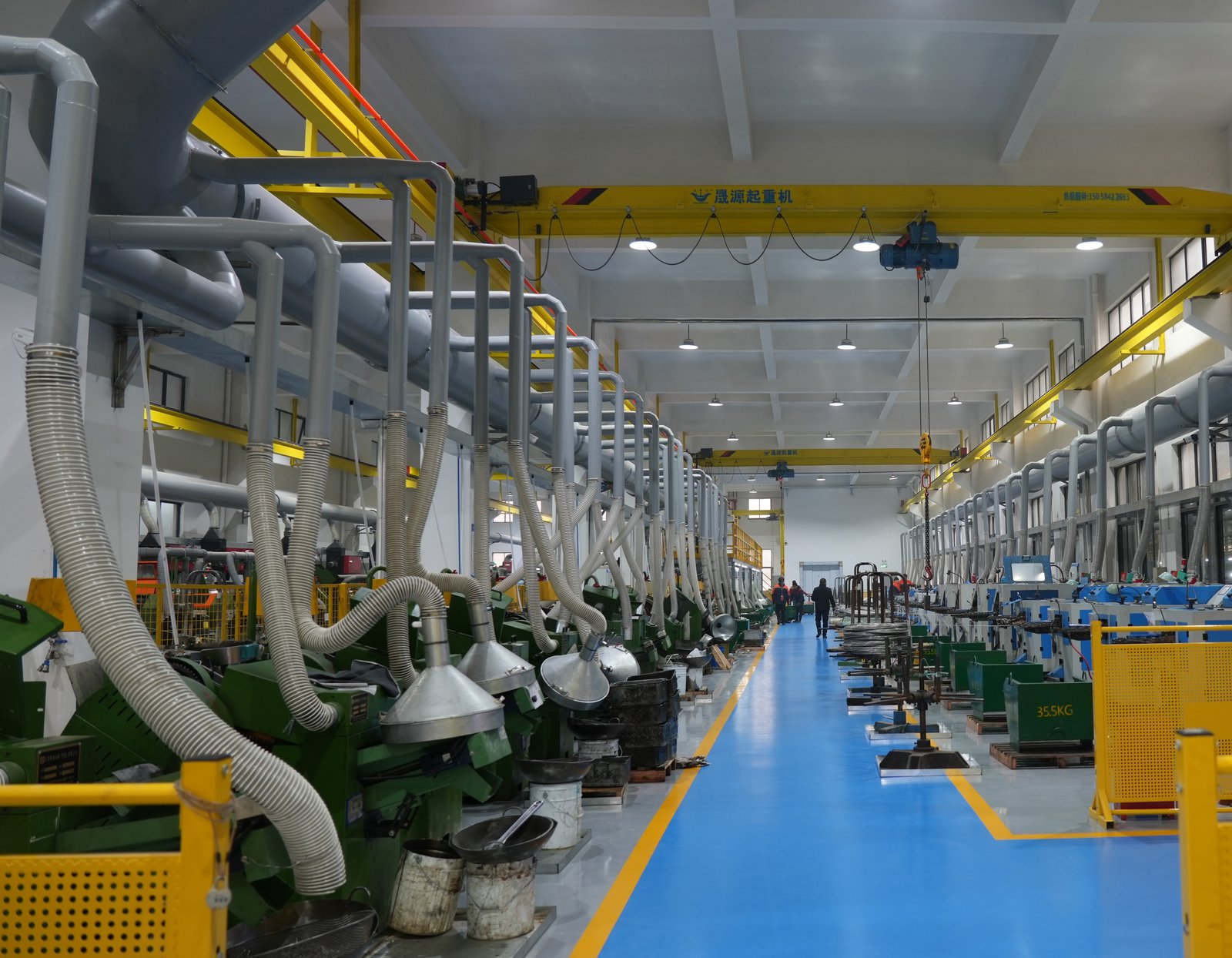
Manufacturing photograph (heading / secondary processing line) from the Ningbo Hongyuan Precision Hardware source library; frame cropped to exclude third-party plant marks. Ruike (Ningbo Hongyuan Precision Hardware Manufacturing Co., Ltd.) handles sourcing and export enquiries only—not ownership of the facility or its certifications.