Choose a thread-forming or thread-cutting screw from the host material, panel thickness, approved pilot-hole geometry and installation requirements. Forming displaces material; cutting removes material and may create chips. A stainless material label or a pointed tip alone does not establish suitability, strip-out performance or an installation torque window. Confirm the exact screw design with the supplier and validate the complete joint.
What the two point geometries actually do
Thread-forming tips displace material into the minor diameter. That cold-works the host and usually raises prevailing torque. Thread-cutting tips have flutes that eject chips; they cut a near-machine-screw thread with less radial stress on brittle or thin stacks.
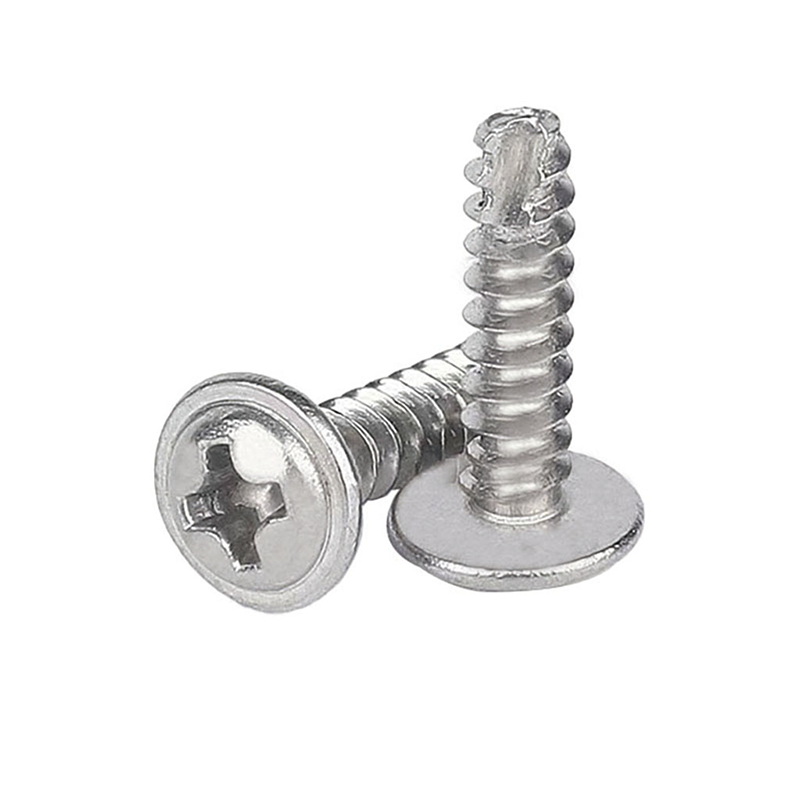
- Forming: better clamp retention in soft stainless or aluminum panels; watch boss bulge and paint crack risk.
- Cutting: lower installation torque into hard stainless; plan chip escape so debris does not jam under the head.
Pilot hole and engagement checklist
| Check | Why it matters |
|---|---|
| Pilot vs recommended drill size for that point | Too small → drive torque spikes / tip walk; too large → strip on first remove-install cycle. |
| Minimum engaged threads (typically ≥3 full threads in sheet) | Short engagement fails pull-out before head torque looks “tight.” |
| Head style vs sealing washer | Bonded washers need flat bearing; sharp under-head ribs can cut the elastomer. |
| Drive recess (Phillips / Torx / hex) | Stainless galling + soft driver bits → cam-out; Torx/hex preferred for production guns. |
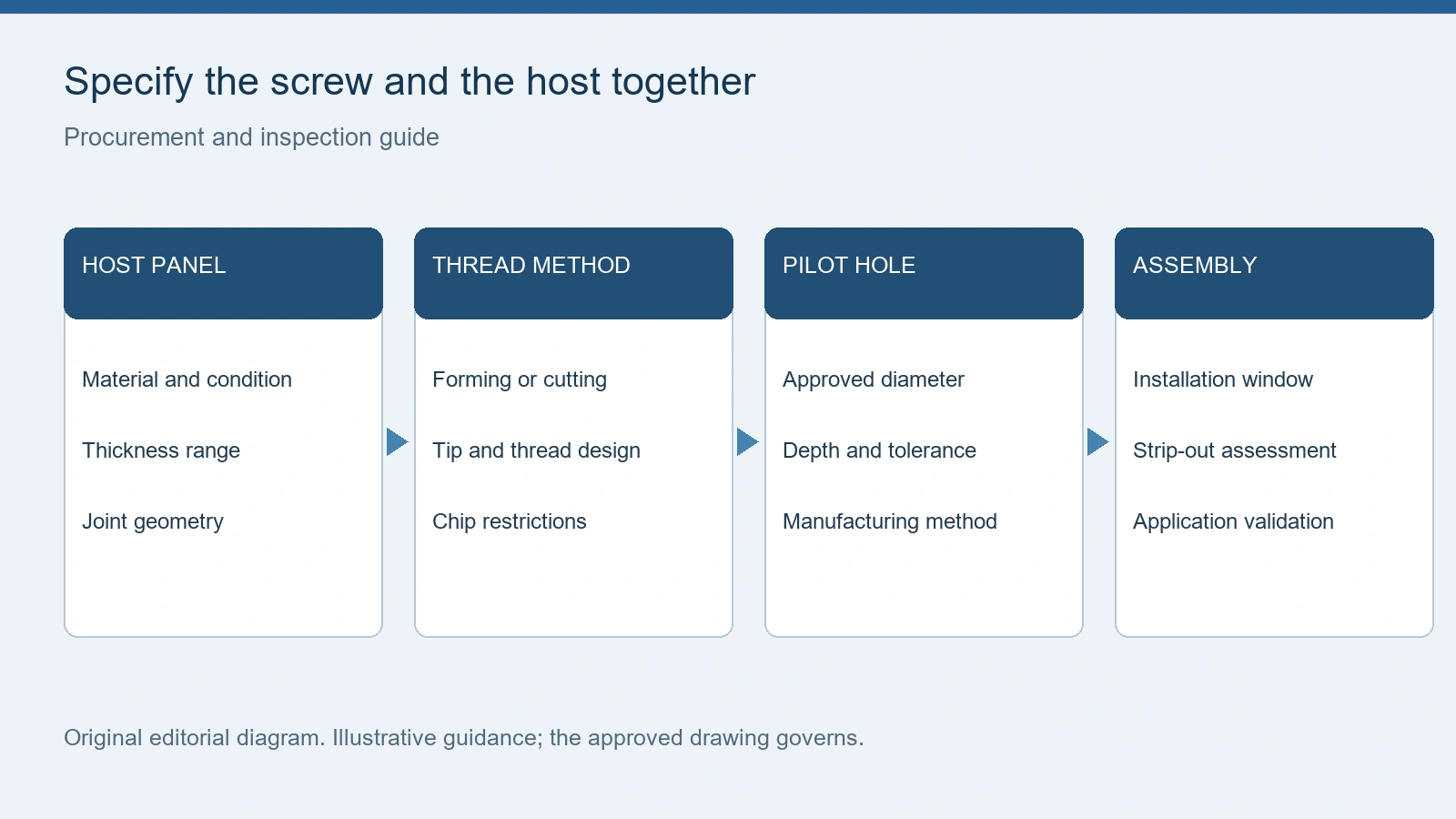
RFQ fields buyers should send
- Host material & thickness (and coating if any)
- Desired point: forming vs cutting (or “recommend”)
- Head + drive + whether sealing washer is required
- Installation method (hand, clutch gun, robotic) and target seating torque band
- Quantity, packaging, and any salt-spray or RoHS note—without inventing certifications you do not hold
FAQ
Can I reuse a forming screw in the same hole? Often once or twice in soft panel; after that the formed thread relaxes and clamp drops—specify a machine screw + nut/insert for service joints.
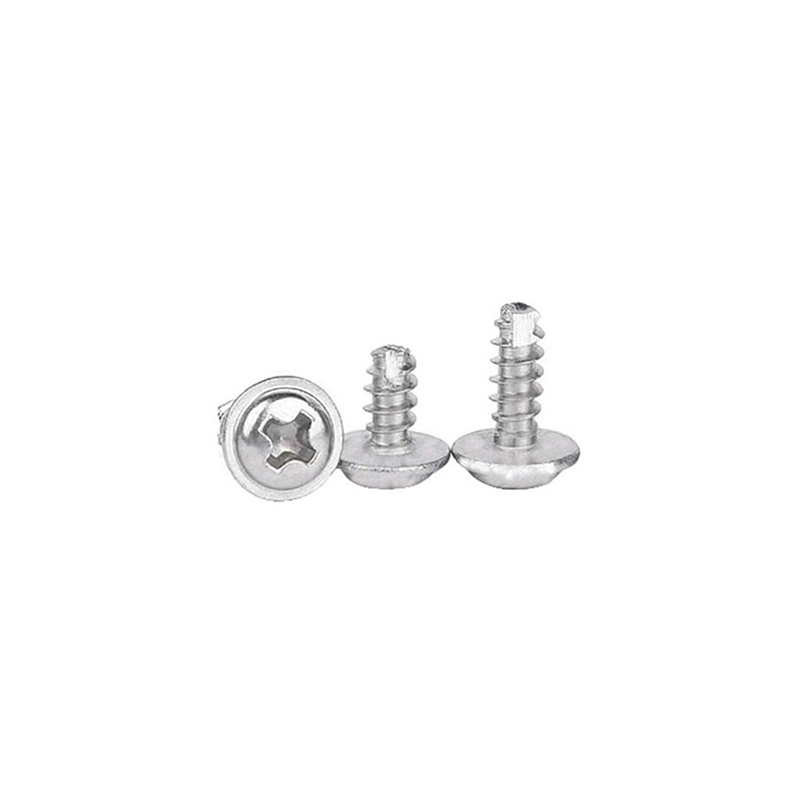
Does A2 vs A4 change the point choice? Grade mainly changes corrosion allowance; point geometry still follows host hardness and thickness.
Need a drawing review? Send stack-up thickness, hole size, and preferred head envelope to HY Fastener—we will map forming vs cutting options without over-claiming test data.
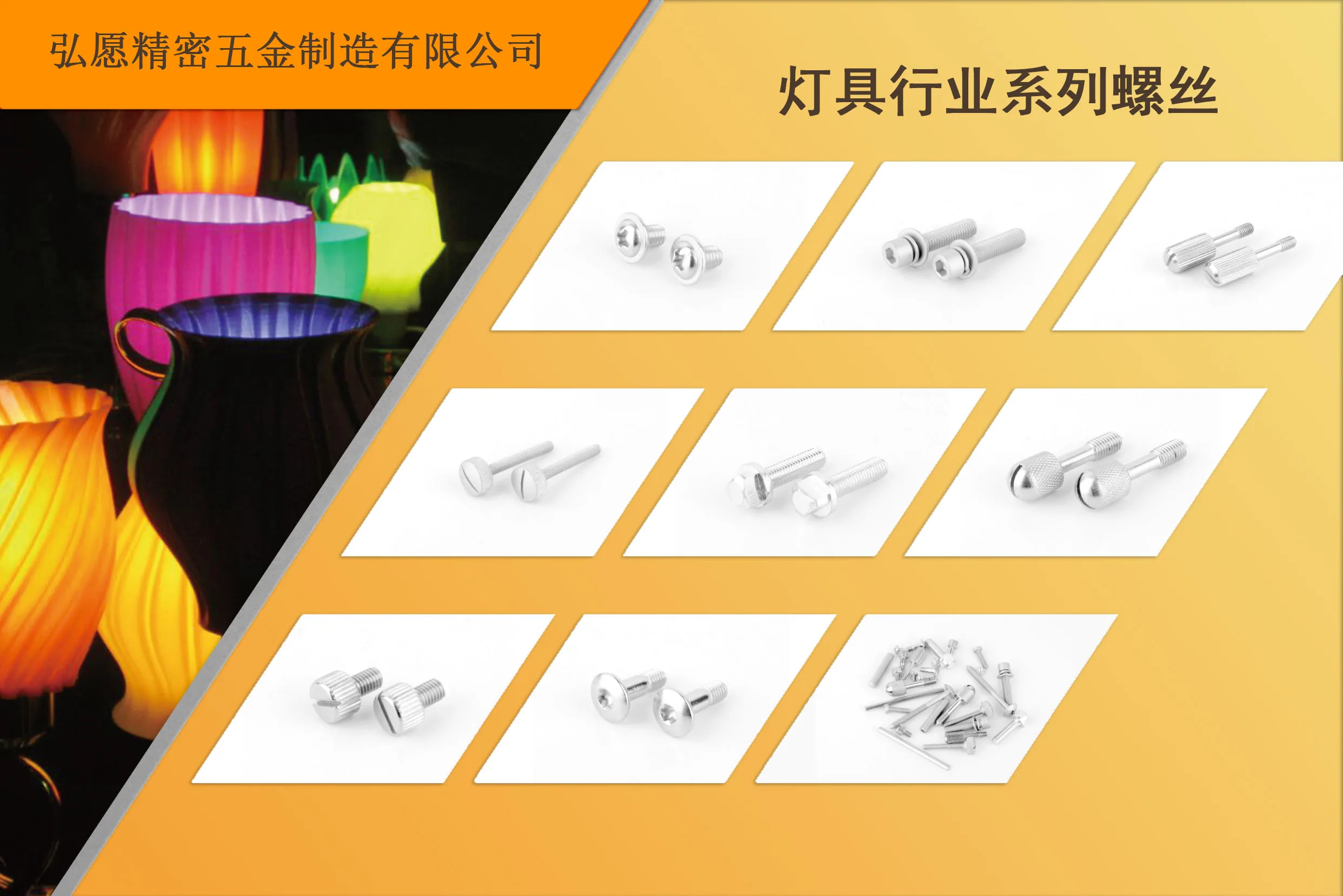
Cover: AI-assisted editorial illustration, not a photograph of production, testing or an actual order. Product photographs in the article are identified separately.