Choose the prevailing-torque lock-nut style that matches temperature, reuse, vibration and inspection needs for the joint. Both types create prevailing torque. Vibration performance depends on the particular product, joint design and validated installation conditions; neither style alone proves that a joint will resist loosening. Match the locking method to the duty cycle instead of treating one style as a default for every bolted joint. Use the checks below before approving a part number for production.
What each locking method does
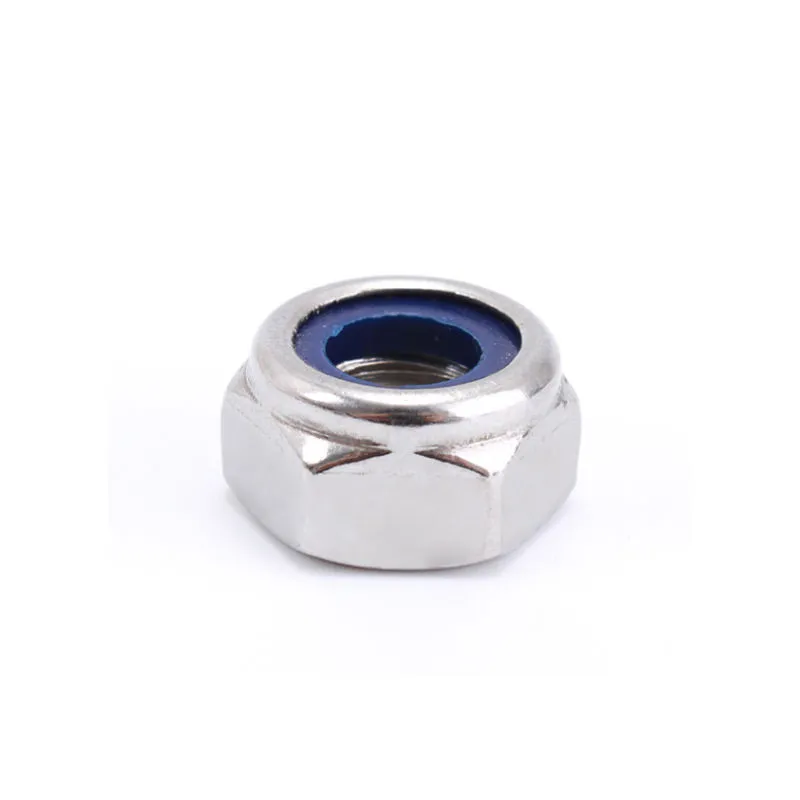
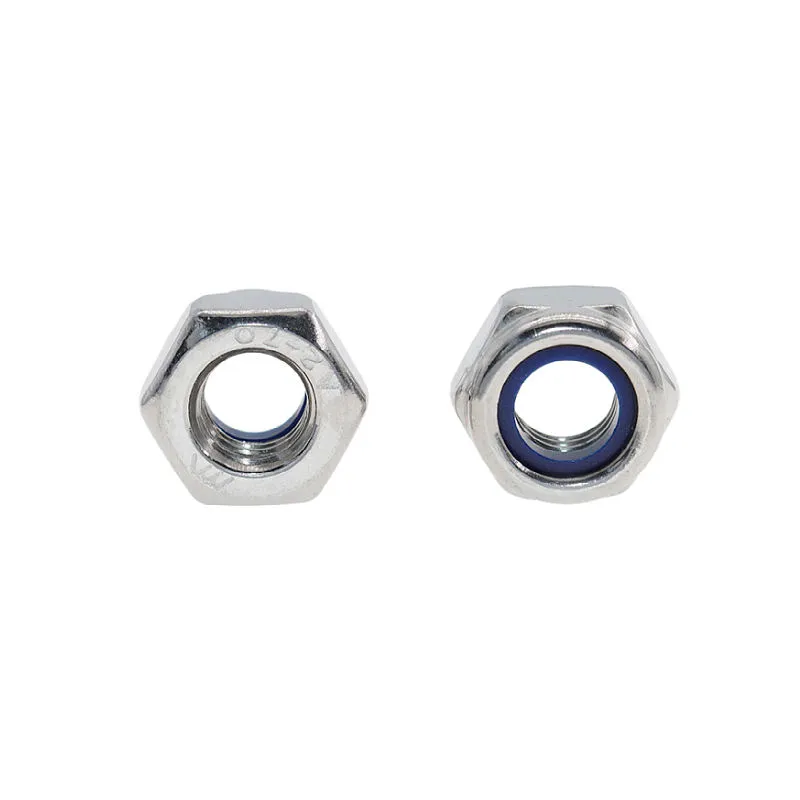
A nylon-insert (nyloc-style) lock nut uses a polymer collar that deforms onto the mating thread and creates prevailing torque. An all-metal lock nut creates prevailing torque by distorted threads, elliptical deformation, beam features or similar metal locking geometry—without a polymer insert. Both are prevailing-torque types: they require torque to run down even before clamp load is developed. They are not the same as free-spinning nuts that rely only on clamp load or separate locking devices.
Decision table by joint condition
Moderate temperature, limited reuse
Tendency for nylon-insert: Often suitable when polymer limits are respected
Tendency for all-metal: Also suitable; confirm locking feature and finish
Elevated temperature near or above polymer rating
Tendency for nylon-insert: Usually unsuitable once insert temperature limits are exceeded
Tendency for all-metal: Prefer metal locking when temperature rules out polymer
Repeated assembly/disassembly
Tendency for nylon-insert: Prevailing torque can drop after reuse; check product reuse limits
Tendency for all-metal: Still subject to reuse limits; verify data sheet, not assumed infinite reuse
Cleanliness / outgassing / chemical exposure
Tendency for nylon-insert: Polymer may be restricted by process rules
Tendency for all-metal: Often preferred where polymer is prohibited
Inspection needs
Tendency for nylon-insert: Record prevailing torque and seating; do not infer lock from appearance alone
Tendency for all-metal: Same: record torque and locking feature identity on the part number
The table is a screening guide, not a Ruike product specification. Confirm temperature ratings, reuse statements and plating compatibility for the exact part numbers on the drawing.
A worked selection example
Illustrative scenario, not a Ruike product specification: an M8 bolted joint on an equipment cover sees occasional service removal, ambient plant temperature below 80 °C, mild vibration and a requirement to retain prevailing torque after first installation. A nylon-insert lock nut can be a candidate if the published polymer temperature and reuse limits cover the duty. If the same joint later moves next to a heat source that exceeds the insert rating, switch screening to an all-metal prevailing-torque nut and re-qualify torque and vibration performance—do not keep the nylon-insert part number by habit.
| Change in duty | Screening action |
|---|---|
| Temperature rises above polymer rating | Drop nylon-insert candidates; evaluate all-metal lock nuts |
| Frequent teardown in maintenance | Check published reuse / prevailing-torque retention; plan replacement interval |
| Process bans polymer near the fluid path | Use all-metal locking or another approved non-polymer method |
Checks neither style replaces
| Check | Record before approval |
|---|---|
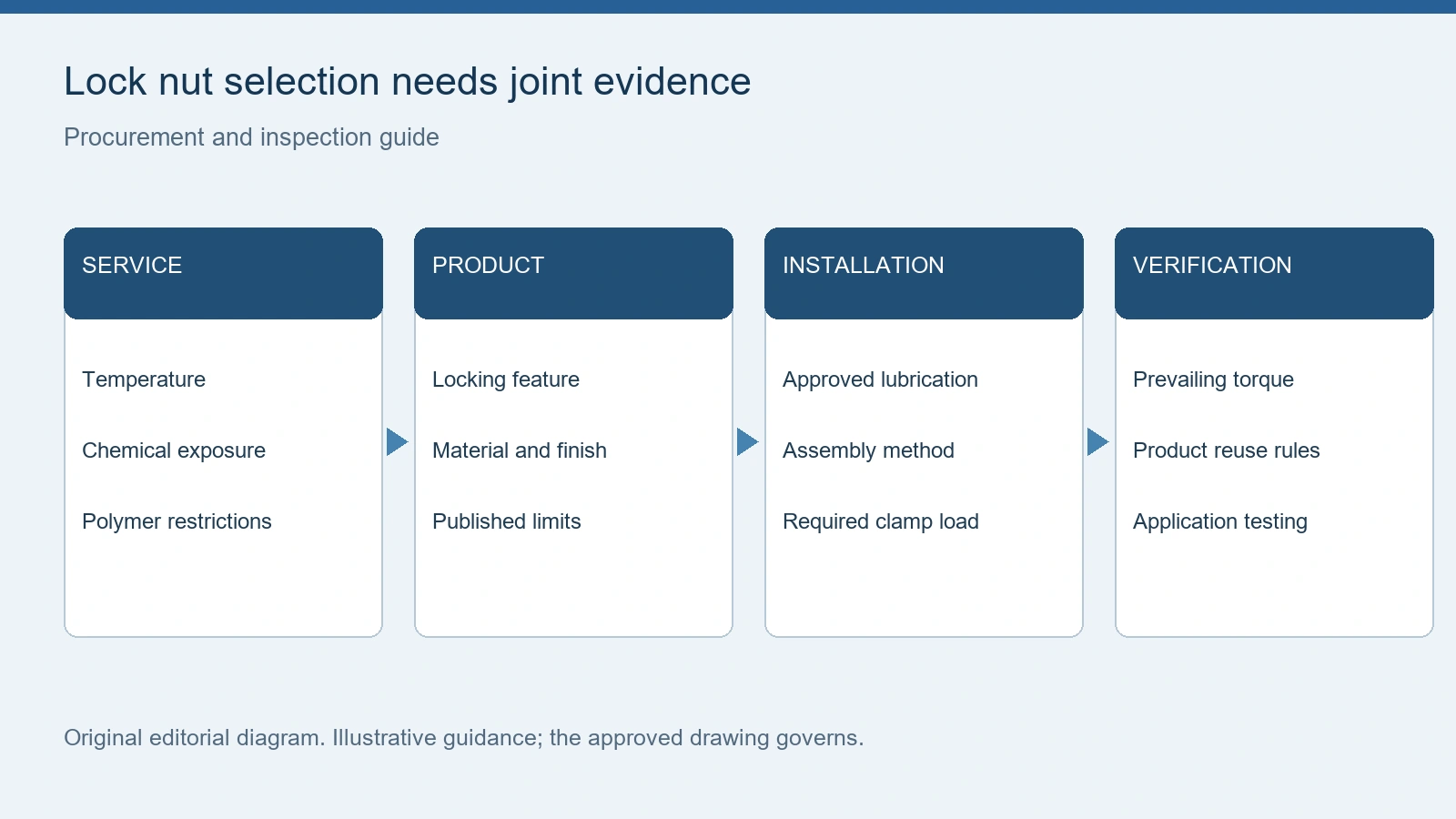
| Clamp load | Target preload, lubrication state and torque method |
| Thread engagement | Nut height, bolt stick-out and mating thread class |
| Finish / material | Compatibility with bolt, washer and environment |
| Standards callout | Exact product standard or manufacturer designation on the drawing |
| Verification | First-article prevailing torque, seating and any vibration trial criteria |
A lock nut does not replace correct clamp load, adequate thread engagement or a washer where bearing stress requires one. Do not mix lock-nut styles in one joint family without documenting why each location differs.
FAQ
Is a nylon-insert lock nut always better for vibration?
No. It can work well within its temperature and reuse limits, but all-metal styles are often required when polymer is unsuitable.
Can I reuse a nylon-insert lock nut indefinitely?
No. Prevailing torque typically declines with reuse. Follow the product data sheet and replace when retention falls outside acceptance.
Does an all-metal lock nut need no temperature check?
No. Confirm the product’s rated conditions, plating and any application limits on the data sheet.
Does specifying any lock nut prove the joint will not loosen?
No. Lock-nut style is only one input. Preload, engagement, finish and verification still matter.
Discuss your drawing with Ruike
Send your drawing, joint temperature and reuse requirements, quantity and required inspection records to shizhanhao6@gmail.com. WhatsApp: +65 98695891. WeChat: Ethan1.
Cover: AI-assisted editorial illustration, not a photograph of production, testing or an actual order. Product photographs in the article are identified separately.
Related assembly guidance
Fastener reuse review checklist. Use the linked guide to review the related assembly considerations; product-specific acceptance still follows the approved drawing and specification.